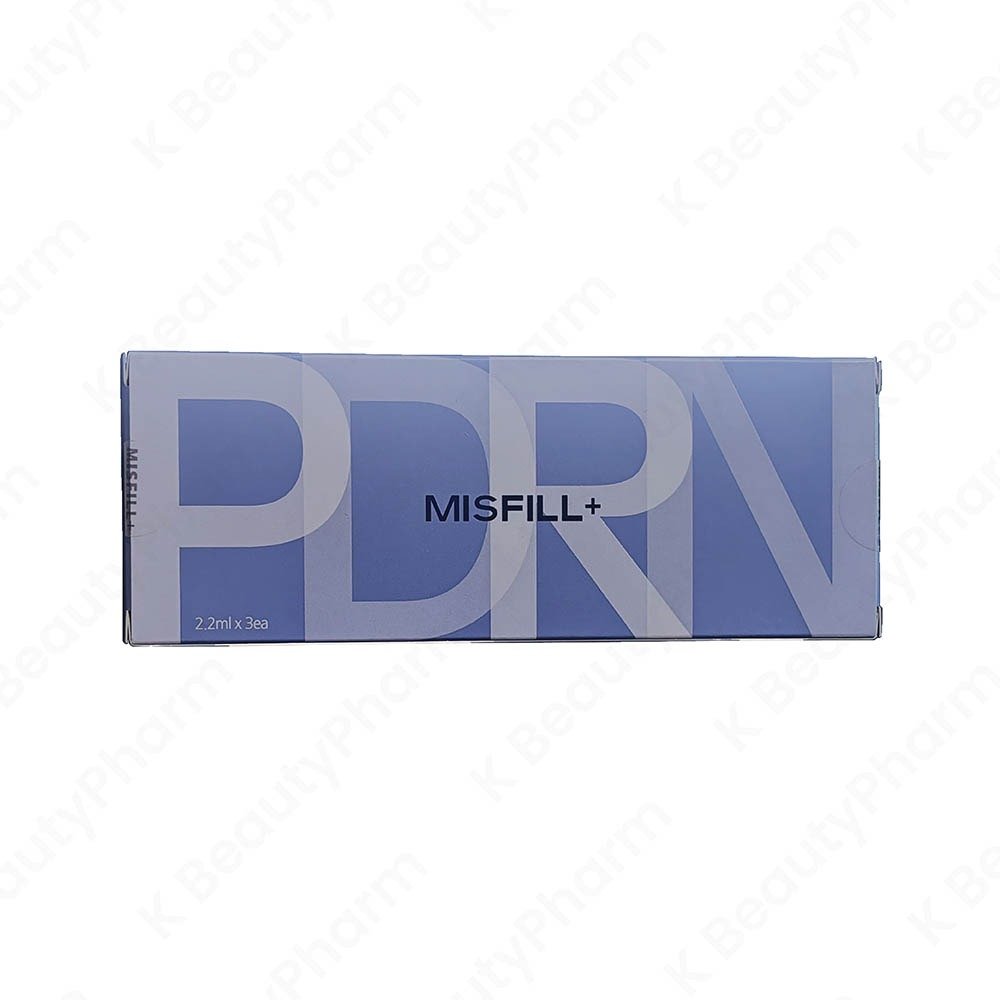
Misfill+ PDRN is a South Korean biorevitalization skin booster. Specifically, it uses salmon DNA for cellular regeneration. This formulation may help minimize acne scars. Additionally, it appears to improve overall skin elasticity. Typically, professionals administer it via careful micro-injections. Alternatively, some providers apply it using microneedling devices.
Product Specifications
| Feature |
Details |
| Product Name |
Misfill+ PDRN |
| Origin |
South Korea |
| Product Type |
Biorevitalization / Skin Booster |
| Package |
2 syringes × 2.2 ml |
| PDRN Concentration |
Salmon PDRN 2 mg/ml |
| Injection Site |
Dermis and epidermis |
| Application Areas |
Face, neck, and hands |
| Treatment Sessions |
2 procedures, 3–4 months apart |
| Maintenance Period |
6 to 12 months |
| Storage |
1°C–30°C, away from direct sunlight |
| Efficacy |
Skin rejuvenation, wrinkle treatment, scar treatment |
What Is Misfill+ PDRN? — Salmon DNA Skin Booster Explained
Misfill+ PDRN targets one specific problem: thinning dermis. Age, UV exposure, and repeated skin inflammation gradually break down the dermis — the layer where collagen and elastin live. This product works at that level directly.
PDRN stands for Polydeoxyribonucleotide. It comes from salmon sperm DNA, purified for clinical use. The compound has been used in European wound healing and tissue repair medicine for decades. In aesthetic contexts, PDRN may stimulate fibroblasts — the cells responsible for collagen synthesis — which could explain its skin-firming effect over time.
Misfill+ pairs that PDRN base with hyaluronic acid for deep hydration and niacinamide to address pigmentation. That combination targets skin aging from several angles at once — not just one symptom.
Key Benefits of Misfill+ PDRN
- Regenerates thinning dermis — slows and may reverse age-related dermal breakdown
- Restores skin elasticity by stimulating collagen and elastin at the cellular level
- Reduces fine lines and early wrinkles through progressive dermis renewal
- Minimizes acne scars and enlarged pores across repeated treatment sessions
- Corrects hyperpigmentation and evens out patchy or discolored skin tone
- Provides deep, lasting hydration via high-concentration hyaluronic acid (20 mg/ml)
- Brightens dull complexion — niacinamide normalizes melanin production gradually
- Lifts sagging skin by restoring structural integrity to the dermis layer
- Reduces facial flushing and rosacea-linked redness through angiogenesis activation
- Offers antioxidant protection against ongoing UV and environmental skin damage
- Visible improvements often appear after the first session — then continue developing
- No surgical downtime — patients typically return to daily activity immediately
Application Areas — Where Misfill+ PDRN Is Used
- Face — fine lines, acne scars, enlarged pores, dull or uneven skin tone
- Neck — early laxity, loss of firmness, creasing along the neck bands
- Hands — visible age spots, texture irregularities, sun-related pigmentation
The face, neck, and hands respond well because dermal thinning tends to show first in these areas. UV exposure accumulates there too — which compounds the aging effect that PDRN directly targets.
Who Are Good Candidates for Misfill+ PDRN Treatment?
This treatment may suit people who:
- Have visible acne marks or noticeably enlarged pores
- Feel their skin has lost elasticity or feels thin and fragile
- Deal with a dull, dark, or persistently uneven complexion
- Want to get ahead of aging before it progresses significantly
- Have post-breakout scarring they want to address without surgery
- Experience ongoing pigmentation problems or recurring facial flushing
By Age Group
- Teenagers — primarily acne scar treatment; helps maintain even skin tone and elasticity
- 20s–30s — scar regeneration, pore refinement, early elasticity support
- 40s–50s — addresses visible wrinkles, skin laxity, and lifting concerns
How to Use Misfill+ PDRN — Step-by-Step Methods
Note: Misfill+ PDRN is for trained aesthetic professionals only — dermatologists, licensed injectors, and aesthetic physicians. It is not designed for self-injection.
Method 1: Micro-Injection (Mesotherapy)
This is the standard clinical delivery method. The product goes in as small, shallow deposits across the target area using a fine-gauge needle.
- Cleanse the treatment area; apply topical numbing cream if needed
- Map injection points across the face, neck, or hands before starting
- Draw up the product from the syringe using aseptic technique throughout
- Inject at dermis–epidermis depth in small aliquots with a 30–32G needle
- Apply light pressure at each point immediately to reduce bruising
- Work systematically across the full treatment zone without skipping areas
- Apply a calming post-treatment mask or soothing serum once complete
- Advise the patient to avoid sun, makeup, and exercise for 24 hours
Method 2: Microneedling (Derma Stamping)
A microneedling device creates micro-channels in the skin surface. The serum then absorbs through those channels into the dermis. Some practitioners prefer this when treating larger areas.
- Cleanse and prep thoroughly — no makeup, debris, or surface oils should remain
- Apply topical anesthetic — this method tends to cause more discomfort than injection
- Set needle depth appropriately for the area (typically 0.5–1.5 mm on the face)
- Apply Misfill+ PDRN serum directly across the treatment zone before needling
- Pass the device evenly in multiple directions — horizontal, vertical, diagonal
- Reapply serum mid-session as needed to keep the skin surface saturated
- Finish with a calming mask suitable for post-microneedling skin
- Follow microneedling aftercare — avoid actives, direct sun, and harsh cleansers for 48–72 hours
Treatment Protocol at a Glance
| Parameter |
Recommendation |
| Total Sessions |
2 procedures |
| Session Interval |
3–4 months apart |
| First Visible Results |
Often after session one |
| Full Effect Timeline |
Several weeks post-treatment |
| Duration of Results |
6–12 months |
Key Ingredients in Misfill+ PDRN — What Each One Does
Hyaluronic Acid — 20 mg/ml
Hyaluronic acid (HA) forms the hydration base of this formula. It is a polysaccharide the body produces naturally — one that binds water and holds it within skin tissue. At 20 mg/ml, this concentration goes well beyond what any topical product can deliver. HA helps maintain the plump, firm quality of skin that typically diminishes with age.
Salmon PDRN (Polydeoxyribonucleotide) — 1–2 mg/ml
PDRN comes from salmon sperm DNA through a purification process. It may activate adenosine A2A receptors in skin cells, which could trigger fibroblast activity and collagen production. Research available through the NIH suggests PDRN supports tissue regeneration and may reduce localized inflammation — both relevant to aesthetic skin treatment. Because it is salmon-derived, people with severe seafood allergies should seek medical advice before proceeding.
Niacinamide — 1 mg/ml
Niacinamide — a form of Vitamin B3 — works by limiting melanin transfer to skin surface cells. Over time, this may visibly reduce hyperpigmentation and even out patchy tone. It also carries mild anti-inflammatory properties, which could help with rosacea-related redness. On top of that, it appears to support barrier function, reducing ongoing moisture loss between sessions.
Sodium Chloride — 7.6 mg/ml
Sodium chloride keeps the formula’s osmolarity in a range the body’s tissue can tolerate during injection. It has no direct cosmetic action — but without it, the product would not be biocompatible. It is a stability ingredient, not an active one.
Buffering Agents — Sodium Phosphate Monobasic & Dibasic Dihydrate
These phosphate salts maintain the formula’s pH within the range compatible with skin tissue. Stable pH means lower irritation risk and longer shelf stability. Again — not cosmetically active, but structurally necessary for safe delivery.
Is Misfill PDRN safe for people with seafood allergies?
Not without a physician’s assessment. PDRN comes from salmon DNA. Anyone with a known salmon or seafood allergy carries a higher reaction risk and should get medical clearance first.