Chin Botox: What It Does, How Much It Costs, and What to Expect

Chin Botox relaxes the mentalis muscle to smooth dimples, reduce the orange-peel texture, and soften deep mental creases. The procedure uses 4–8 units of botulinum toxin type A. Results appear in 3–5 days. Full effects settle by 2 weeks. Effects last 3–4 months.
Most standard resources overlook a critical detail: the mentalis muscle has three distinct anatomical types, and each requires a specifically tailored injection approach to be effective. This off-label procedure requires precise anatomical knowledge to prevent complications.
Based on current clinical data, this guide fills that gap by providing an evidence-based breakdown of mentalis neuromodulator treatment.
In this guide, you will learn:
- Anatomy: How to identify the three morphological types of the mentalis muscle.
- Technique: Precise injection protocols, required depths, and unit dosages based on muscle type.
- Expectations: Standard results timelines, cosmetic improvements, and estimated costs.
- Safety: How to minimize risks and prevent toxin diffusion into adjacent perioral muscles.
What Does Botox on the Chin Do?
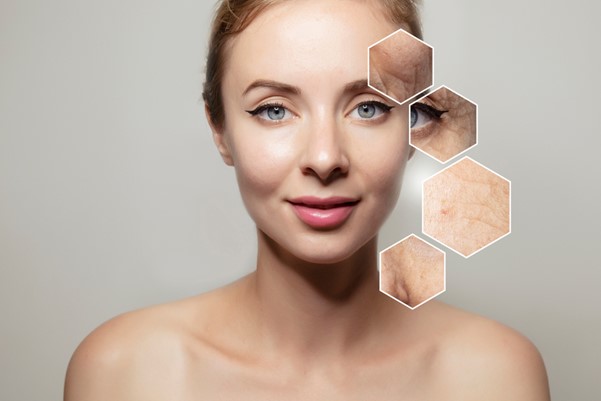
Chin Botox reduces hyperactivity in the mentalis muscle. This stops the muscle from pulling chin skin into dimples, creases, and pits.
Chin Botox produces 3 specific outcomes:
- Smooths the orange-peel or cobblestone texture — caused by superficial fiber overactivity
- Softens the mental crease — the deep groove between the lower lip and chin
- Subtly elongates the chin — by releasing the upward pull of the deep muscle fibers
Botulinum toxin type A (BoNT-A) blocks acetylcholine at the neuromuscular junction. Acetylcholine triggers muscle contraction. Without it, the mentalis relaxes. The chin surface flattens.
Note: The FDA has not approved Botox specifically for chin treatment. The procedure is off-label for this area. It is an established and clinically validated practice among trained aesthetic medicine providers.
How the Mentalis Muscle Creates Chin Dimples
The orange-peel chin texture results from overactive superficial mentalis fibers. These fibers attach directly under the dermis. Excessive contraction compresses certain dermis segments. Uncompressed segments stay flat. The uneven result produces the cobblestone or peau d’orange appearance.
The deep fibers produce a different problem. They elevate chin soft tissue. Overactivity pulls the chin tip upward. This shortens the chin’s apparent length. It also deepens the mental crease between the lower lip and chin.
Aging worsens both effects. Subcutaneous fat thins over time. Skin loses collagen and elasticity. The mentalis compensates by contracting harder. Visible dimpling deepens.
Why the Mentalis Muscle Becomes Hyperactive
There are 5 main causes of mentalis hyperactivity:
- Morphological variation — dome-shaped muscles (Types A1 and A2) produce stronger contractions than flat muscles (Type B)
- Skeletal discrepancies — retrognathism and Class II malocclusion force the mentalis to compensate for reduced chin projection
- Aging and fat loss — thinner subcutaneous fat reduces the skin’s ability to absorb contraction forces, increasing visible hyperactivity
- Functional habits — bruxism, repetitive speech patterns, and lip-sucking behavior condition the muscle to stay in chronic tension
- Prior aesthetic procedures — incorrect filler placement disrupts chin anatomy and triggers compensatory muscle overactivity
The 3 Types of Mentalis Muscle — What They Mean for Botox
There are 3 anatomical types of the mentalis muscle. Each type causes a different pattern of chin changes. Each type requires a different injection strategy.
Cadaveric and ultrasound studies (Choi et al., 2021) identify the 3 types:
- Type A1 (Unified Dome): The 2 paired muscles merge at the midline with no gap. Hyperactivity produces a single, continuous mental crease across the central chin.
- Type A2 (Twin Peaks): The 2 muscles stay separated. A visible gap exists between them. Hyperactivity produces 2 distinct creases — one on each side of the chin. The central chin remains relatively smooth.
- Type B (Flat Horizon): The muscle is thin and nondimensional. It has less volume than Types A1 and A2. Hyperactivity causes shallow, less-pronounced creases.
Identifying the muscle type before treatment is not optional. It determines injection points, depth, and dosing.
Mentalis Muscle Anatomy: Key Clinical Measurements
The mentalis sits 6.7–10.7 mm below the skin surface. Average muscle thickness is 4.0 mm (± 1.4 mm).
The muscle originates from the incisive fossa of the mandible. The medial fibers begin 4 mm from the midline. The lateral fibers reach 13 mm from the midline. At insertion, medial fibers lie 2 mm from the midline. Lateral fibers spread to 20 mm from the midline.
These measurements explain why injection accuracy matters to the millimeter. A 5 mm placement error targets a completely different anatomical structure.
Who Is a Good Candidate for Chin Botox?
The ideal candidate has a hyperactive mentalis muscle causing visible dimpling, puckering, or mental crease deepening.
Use this 1-step clinical test to confirm candidacy: ask the patient to purse their lower lip. The mentalis contracts visibly. The treatment produces a positive result, if dimpling appears during this movement. No dimpling means there is no indication for treatment.
There are 4 patient profiles that respond best to chin Botox:
- Patients with visible chin dimpling at rest or during facial expression
- Patients who prefer a non-filler lower-face approach
- Patients with mild chin asymmetry or lower lip tension
- Patients with early aging changes in the chin or lower lip area
Who Should Not Get Chin Botox?
Chin Botox is not appropriate for 5 specific patient categories:
- Patients with skeletal chin retrusion or microgenia — structural deficit needs filler or implants first
- Patients with a history of lower lip incompetence or oral motor dysfunction
- Patients with neuromuscular conditions such as myasthenia gravis or ALS
- Patients who are pregnant or breastfeeding
- Patients with active skin infection at the injection site
Patients with significant volume loss or deep chin retrusion need filler as a first step. After 2 weeks, treat remaining dimpling with Botox if it persists.
Chin Botox Injection Points, Depth, and Dosing by Muscle Type
The injection protocol for chin Botox changes with each mentalis muscle type. There are 2 injection layers: superficial (subdermal, ≤3 mm) and deep (intramuscular, near the bone).
Use a 30G or 31G needle for all injections. Clean the area with antiseptic solution before starting. Mark all injection points with a skin pen first. Inject adjacent to the marked area — not directly on the mark — to avoid tattooing the skin.
Type A1 Injection Protocol
Type A1 requires 4 total injection points.
Superficial injections (subdermal):
- Points: pogonion and gnathion on the midline (2 points)
- Dose: 1 IU per point
- Depth: less than 3 mm
Deep injections (intramuscular):
- Points: 5 mm lateral to the pogonion, both sides (2 points)
- Dose: 2–3 IU per point
- Depth: deep, near the bone
Total dose for Type A1: 6–8 IU.
Type A2 Injection Protocol
Type A2 also requires 4 injection points. The placement shifts outward compared to Type A1.
Superficial injections:
- Points: 5 mm lateral to the gnathion, both sides (2 points)
- Dose: 1 IU per point
- Depth: less than 3 mm
Deep injections:
- Points: 10 mm lateral to the pogonion, both sides (2 points)
- Dose: 2–3 IU per point
- Depth: deep, near the bone
Total dose for Type A2: 6–8 IU.
Type B Injection Protocol
Type B requires only deep injections. No superficial injection is necessary for this type.
Deep injections:
- Points: 5 mm lateral to the pogonion, both sides (2 points)
- Dose: 2 IU per point
- Depth: less than 3 mm
Total dose for Type B: 4 IU.
How Many Units Does the Chin Need?
The chin requires 4–8 units of botulinum toxin per session. Types A1 and A2 use 6–8 units across 4 injection points. Type B uses 4 units across 2 deep injection points.
Do not inject too far lateral from the midline. The depressor labii inferioris (DLI) sits adjacent to the mentalis. Toxin diffusion into the DLI causes lower lip heaviness and smile asymmetry.
Avoid injecting too superficially. Under-treating the deep fibers leaves active muscle strands pulling the skin surface. The chin then shows contraction on the surface, even when superficial fibers are treated.
Reconstituting Botulinum Toxin for Chin Injections
Reconstitute each toxin brand with preservative-free 0.9% sodium chloride. Swirl the vial gently after adding saline. Never shake vigorously. Vigorous shaking denatures the protein and reduces efficacy.
There are 3 common botulinum toxin products with different reconstitution protocols:
- Botox (Allergan, 100 U vial): Add 2 mL saline → yields 5 U per 0.1 mL. Use within 24 hours.
- Xeomin (Merz, 100 U vial): Add 2 mL saline → yields 5 U per 0.1 mL. Use within 24 hours.
- Dysport (Ipsen, 500 U vial): Add 2.5 mL saline → yields 20 U per 0.1 mL. Dysport units are not interchangeable with Botox or Xeomin units. Direct unit comparisons between brands are inaccurate.
Chin Botox Before and After: What to Expect at Each Stage
The first visible improvements from chin Botox appear 3–5 days after injection. Full results are visible by 2 weeks.
The timeline follows 3 stages:
- Days 1–3: No visible change. The toxin binds to nerve endings. Acetylcholine blocking has not yet reached full effect.
- Days 3–7: Initial smoothing appears. Orange-peel texture begins to reduce. Dimpling decreases visibly.
- Days 7–14: Full effect settles. The chin surface is visibly smoother. The mental crease softens. Chin contour improves.
A 2023 clinical case series tracked 12 patients at 3 follow-up visits. Visits occurred at 10 days, 2 weeks, and 4 weeks post-injection. Patients assessed results using the FACE-Q satisfaction instrument. They reported improvements across 5 areas:
- 34% increase in perceived facial symmetry
- 39% increase in perceived facial freshness
- 11% improvement in profile appearance
- 30% improvement in appearance in photographs
- 16% improvement in appearance upon waking
All 12 patients were women. Average age was 42 years. Dimpling and bunching reduced significantly on the frontal view. Chin contour improved to a rounder, less blunted profile.
How Long Does Chin Botox Last?
Chin Botox results last 3–4 months. After this period, the toxin metabolizes. The mentalis regains full contraction capacity. Dimpling and texture changes return.
The 2023 clinical study confirmed this. Effects faded after approximately 3.5 months in all 12 participants. In turn, repeat injection every 3–4 months maintains continuous results. Some patients extend this interval after multiple consistent treatment cycles. Individual variation depends on muscle activity level, metabolic rate, and injection dose.
How Much Does Chin Botox Cost?
Chin Botox costs $40–$120 per session in the US. This price reflects 3–8 units at $10–$15 per unit.
There are 3 factors that affect the final price:
- Units used — determined by muscle type and contraction severity
- Provider experience and setting — board-certified specialists charge more than non-specialist injectors
- Geographic location — metropolitan clinics charge higher rates than suburban or rural practices
Health insurance does not cover chin Botox. It is an elective cosmetic procedure. All costs are out of pocket.
Annual maintenance cost ranges from $160–$480, accounting for 3–4 treatment sessions per year.
Chin Botox Side Effects and Risks
Chin Botox produces side effects in 2 categories: minor and functional. Minor effects are common and temporary. Functional effects relate to adjacent muscle involvement.
There are 4 minor side effects:
- Redness, swelling, or bruising at injection sites (resolves in 2–5 days)
- Tenderness at the injection site lasting 1–2 days
- Mild headache in the first 24 hours
- Temporary skin numbness near the injection area
There are 3 functional side effects specific to chin Botox:
- Lower lip heaviness — occurs when toxin diffuses into the depressor labii inferioris (DLI)
- Asymmetric smile — occurs when adjacent perioral muscles are affected
- Loss of lower lip expressiveness — reported in 100% of study participants, peaked at day 8, then diminished
The loss of lower lip expressiveness is predictable and temporary. It begins around day 4 post-injection, peaks at day 8 and diminishes after day 8. No functional complications beyond this expressiveness change — including pain, bruising, redness, swelling, or weakness — were recorded in the published 2023 clinical study.
Can Chin Botox Go Wrong?
Yes, chin Botox produces complications when toxin spreads beyond the mentalis muscle. The DLI and orbicularis oris sit adjacent to the mentalis. Toxin migration into these muscles causes smile asymmetry and lower lip drooping.
These complications are temporary. They resolve within 6–12 weeks as the toxin metabolizes. Unlike hyaluronic acid filler, Botox has no enzymatic antidote. There is no reversal agent.
Reduce complication risk by following 4 injection principles:
- Avoid injecting too far lateral from the midline
- Confirm correct needle depth before releasing the dose
- Use a conservative dose on the first treatment session
- Schedule a 2-week review before considering additional units
Chin Botox vs Filler: What Is the Difference?
Chin Botox and filler target different underlying problems. Botox addresses muscle hyperactivity. Filler restores volume and structural projection.
| Factor | Chin Botox | Chin Filler (HA) |
| Primary target | Mentalis muscle overactivity | Volume loss, structural deficit |
| Main indication | Dimpling, orange-peel texture, mental crease | Weak chin, asymmetry, retrusion |
| Onset | 3–5 days | Immediate |
| Duration | 3–4 months | 12–18 months |
| Reversible? | No | Yes — with hyaluronidase |
| US cost per session | $40–$120 | $600–$1,200 |
Combination treatment produces the strongest outcomes. Add filler first to correct chin projection. After 2 weeks, add Botox if dimpling persists. Filler stretches overlying tissue and reduces surface pitting. Botox relaxes the muscle driving the remaining dimples.
For patients with a retrognathic chin, address projection with filler first. Then reassess mentalis hyperactivity. Treat with Botox only if dimpling remains after the filler settles.
Chin Botox for Double Chin: Does It Work?
Chin Botox does not reduce submental fat or eliminate a true double chin. The treatment targets the mentalis at the chin tip — not the platysma or submental fat layer.
A true double chin has 2 primary causes:
- Excess submental fat — located in superficial and subplatysmal layers
- Platysma muscle laxity — creating downward pull on the jawline and neck
Botox into the platysma relaxes this downward tension. This creates a subtle jawline lift. However, it does not destroy fat cells.
There are 3 non-surgical options for fat-related double chin:
- Kybella (deoxycholic acid) — permanently destroys submental fat cells via chemical lysis
- CoolSculpting (cryolipolysis) — freezes and destroys submental fat cells without needles
- Submental microneedle BTX-A — 10–20 units injected into the platysma using 34G microneedles, in 3–4 rows spaced 0.5–1 cm apart
A 2025 study in Plastic and Reconstructive Surgery Global Open treated 5 female patients. Ages ranged from 22 to 55 years. These patients developed worsened double chins after platysma Botox. Submental microneedle injections produced visible lifting after an average of 7 days. All 5 patients improved. Results lasted 3 months. No voice changes or swallowing complications occurred.
How to Prepare for Chin Botox
Prepare for a chin Botox appointment by following these 6 steps:
- Stop NSAIDs — ibuprofen and aspirin — 1 week before the appointment to reduce bruising risk
- Discontinue fish oil and ginkgo biloba supplements 1 week before
- Avoid alcohol 48 hours before the session
- Arrive with a clean, makeup-free face
- Disclose all medications, health conditions, and allergies during the pre-treatment consultation
- Review and sign the patient consent form before treatment begins
A topical lidocaine anesthetic is optional. Apply 1 hour before injection to reduce discomfort. Remove it with a non-alcoholic disinfectant before injection begins.
Chin Botox Aftercare Instructions
Follow these 5 aftercare steps after chin Botox to protect results:
- Stay upright for 4 hours after injection
- Avoid touching, rubbing, or pressing on the treatment area
- Skip exercise for the rest of the treatment day
- Avoid heat sources — saunas, hot baths, and direct sunlight — for 48 hours
- Sleep on your back the first night to avoid pressure on the injection sites
Apply antibiotic cream to the treated area immediately after injection. Wipe it off after 10 minutes. Do not expose the treated area to heat for 48 hours. The first results appear 72 hours after injection. Optimal results appear at 9 days.
Frequently Asked Questions About Chin Botox
How long does chin Botox last?
Chin Botox results typically last between 3 to 4 months (approximately 90 to 120 days). The effects fade gradually as the botulinum toxin metabolizes and the mentalis muscle regains its ability to contract. To maintain a continuously smooth chin, repeat treatments are recommended every 3 to 4 months.
How many units of Botox are needed for the chin?
The mentalis muscle generally requires 4 to 8 units of botulinum toxin per session. The exact dosage depends on the muscle’s specific anatomical structure: Types A1 and A2 typically require 6 to 8 units spread across superficial and deep injection points, while Type B usually requires only 4 units injected deeply.
Is chin Botox worth it?
For patients struggling with a hyperactive mentalis muscle, clinical outcomes show high satisfaction. In a recent clinical study, 100% of participants reported an overall improvement in facial appearance following treatment. Specifically, patients noted a 34% increase in perceived facial symmetry and a 39% increase in facial freshness.
Can chin Botox affect my smile?
Yes, if the injection is not placed correctly. The depressor labii inferioris (DLI), which controls the downward pull of the lower lip, sits immediately adjacent to the mentalis muscle. If the toxin diffuses into the DLI, it can cause a temporary asymmetric smile or a feeling of heaviness in the lower lip. However, all patients will experience a predictable, temporary loss of general lower lip expressiveness, which usually peaks around day 8 before gradually diminishing.
Does chin Botox slim the face or fix a double chin?
No, chin Botox does not slim the face or dissolve submental fat. It specifically targets the mentalis muscle at the tip of the chin to stop dimpling and smooth the skin’s surface. While it can subtly elongate the appearance of the chin by releasing upward muscle tension, true jawline slimming requires masseter Botox. Addressing a double chin requires treatments targeting the platysma muscle or submental fat removal.
What is the best age to get Botox in the chin?
There is no strict age requirement. The treatment is indicated whenever mentalis hyperactivity causes visible, bothersome dimpling, orange-peel texture, or a deep mental crease. Because aging causes subcutaneous fat and collagen loss—which forces the mentalis to contract harder to compensate—many patients begin to notice these textural changes in their 30s and 40s.
Will my chin return to normal after the Botox wears off?
Yes. The procedure is entirely reversible and causes no permanent structural changes to the mentalis muscle or the overlying skin. Once the neuromodulator fully metabolizes, the muscle regains normal function, and the chin will return exactly to its pre-treatment appearance.
Sources: Nazari A. (2024). Botulinum Toxin A for Chin. In Keyhan et al. (eds.), Handbook of Oral and Maxillofacial Surgery and Implantology. Springer. | Corradino B. et al. (2023). Chin imperfections: our experience with botulinum toxin A. Aesthetic Medicine, 9(1). | Qiang S. et al. (2025). Submental Microneedles of Botulinum Toxin A for Double Chin After Neck Injection. Plast Reconstr Surg Glob Open, 13(3). | SERP data: chin botox, June 2026, US-EN.