What Is Rejuran Healer? Benefits, Procedure, Side Effects, Downtime, and Results

Someone getting dozens of tiny injections, a face full of mosquito-bite bumps, and then — a few weeks later — genuinely glowing skin. It is rejuran healer tretment.
Rejuran Healer is gaining attention for its ability to improve skin quality, not just provide a quick fix. It targets smoother texture, better hydration, reduced dullness, finer pores, and fewer fine lines. However, confusion arises as some sources discuss injectable treatments while others focus on creams and ampoules.
Unlike typical fillers or Botox, Rejuran Healer works differently to deliver skin rejuvenation through tiny injections that leave temporary bumps. The results, however, are worth it—radiant, refreshed skin after a few weeks.
This guide explains the treatment, its benefits, pain level, recovery, and how it compares to other options like Rejuran HB, microneedling, and Botox.
What Is REJURAN Healer?
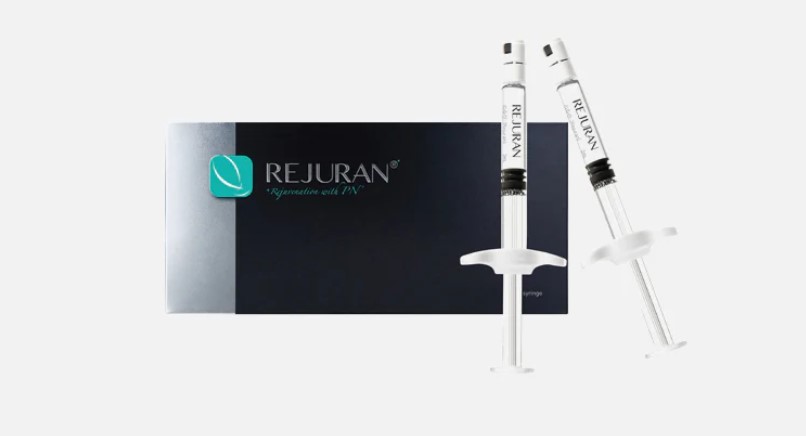
Rejuran Healer is an medical device/injectable skin booster made with polynucleotides (PN) derived from salmon DNA. It is injected into the dermal layer of the skin to stimulate fibroblast cell which produce collagen, elastin, HA. So, it’s typically positioned as a regenerative treatment aimed at repaid damaged dermal cell, improving hydration, elasticity, texture, fine lines, and overall skin quality rather than adding facial volume.
The treatment was developed in South Korea by PharmaResearch Products Co. Ltd., using proprietary DNA Fragments Optimizing Technology (DOT™) to extract and purify polynucleotide chains (small DNA Fragments) from wild salmon. Because salmon DNA shares significant structural similarity with human DNA, the body embrace it well — the molecules are biocompatible, not synthetic, and get fully broken down and absorbed over time.
What makes REJURAN Healer different from hyaluronic acid-based skin boosters is the mechanism. Hyaluronic acid hydrates by attracting water molecules; it adds volume and moisture but doesn’t tell your skin to do anything differently.
Polynucleotides, by contrast, signal cells to repair themselves. They promote fibroblast activity, stimulate collagen synthesis, reduce inflammation, and support the skin’s own regenerative processes. It’s less about filling a gap and more about retraining the skin to behave more like younger skin.
The result shows up gradually — typically over three to four weeks — rather than immediately after treatment.
The alternative of Rejuran is Sheergen PN.
What Is REJURAN Healer Good For?
This is one of the most searched questions around this treatment, and for good reason. REJURAN Healer isn’t a one-trick filler. Its polynucleotide base works across multiple skin concerns simultaneously, which is part of why it became a staple of Korean aesthetic medicine before expanding internationally.
Here’s what clinical use and patient outcomes suggest it addresses effectively:
- Skin texture and tone: Smooths uneven surface texture, reduces enlarged pores, and brings more uniformity to skin tone.
- Fine lines and early wrinkles: Improves elasticity, which softens the appearance of fine lines — particularly those caused by skin laxity rather than muscle movement.
- Dullness and dehydration: Restores the skin’s oil-water balance, which can reduce both excessive dryness and overactive sebum production.
- Acne scarring: While not a dedicated scar treatment, the cellular regeneration effect can gradually improve the appearance of atrophic (pitted) acne scars over a course of sessions.
- Sun damage and environmental wear: Helps reverse the thinning and inflammation caused by UV exposure and other environmental stressors.
- Skin barrier strength: Particularly useful for those whose skin has been sensitized or damaged by aggressive laser treatments or overly active skincare routines.
It is not the right tool for adding volume, sculpting facial structure, or addressing dynamic wrinkles (the kind caused by repetitive muscle movement). For those concerns, fillers and neurotoxins remain the appropriate options. Many practitioners combine Rejuran with those treatments for a more complete result.
The Four Types of REJURAN: Which One Is Right for You?
This is where things get more nuanced than most articles bother to explain. There isn’t just one version of REJURAN Healer — there are four distinct formulations, each with a different concentration, consistency, and target use.
REJURAN Healer (The Standard)
The original and most widely used version. It contains the highest concentration of polynucleotides and is injected into the dermis using multiple micro-injections covering the full face (sometimes neck or hands as well). Because of its thicker consistency, it produces the characteristic small raised bumps — “blebs” — at injection sites, which typically resolve within one to three days.
This is the version people mean when they just say “Rejuran.” It’s aimed at long-term skin regeneration and is commonly recommended in a course of three to four sessions spaced four to six weeks apart.
REJURAN HB (Hydro Booster)
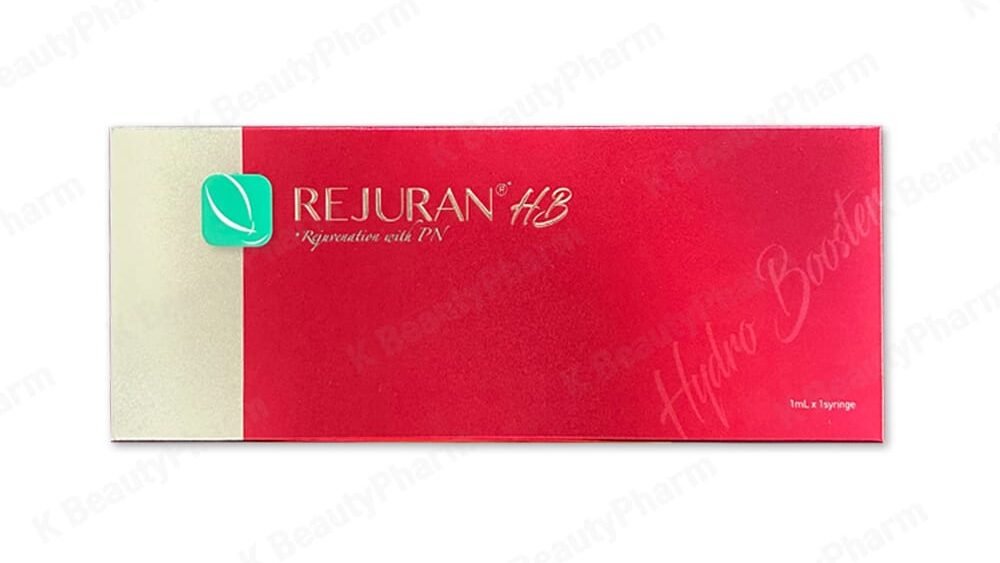
REJURAN HB combines polynucleotides with hyaluronic acid and lidocaine. The addition of hyaluronic acid shifts the focus toward immediate hydration alongside regeneration, while the lidocaine reduces procedural discomfort — though “less painful” is relative, since the same number of injections still goes in.
For people with persistently dry skin, or those who want some of the hydration effect of a hyaluronic acid booster alongside the regenerative benefits of PN, HB is worth discussing with a provider. In terms of efficacy for cellular repair, most experienced practitioners consider the standard Healer more potent because the polynucleotide concentration is higher.
REJURAN I (Eye)
A lighter, lower-viscosity formulation designed specifically for the periorbital area — around and under the eyes. This region requires a gentler approach; the standard Healer’s thickness isn’t appropriate for such delicate tissue.
REJURAN I targets fine lines, crepiness, dark circles caused by thin skin, and puffiness. It’s often administered alongside the standard Healer in the same session.
REJURAN S (Scar)
A thicker formulation with a higher PN concentration, designed to be injected directly into depressed scars rather than distributed across the full face. The increased density is meant to push deeper into scar tissue and promote more localized collagen remodeling. It’s slower-acting than the other variants and works best as part of a broader scar treatment protocol, often alongside microneedling or lasers.
The REJURAN Healer Procedure: What Actually Happens
Before the Treatment
Most clinics apply a topical numbing cream 20 to 30 minutes before the procedure begins. Some patients request longer numbing time, which is reasonable to ask for — though it doesn’t eliminate discomfort entirely.
During the Procedure
The practitioner injects small amounts of the PN solution into the dermis at approximately 50 to 70 injection points across the face, spaced a centimeter or so apart. This can be done by hand with a fine needle or using a device like a Dermashine or Hycoox machine.
Manual injection, when performed by a skilled provider, allows for more precise delivery and less product waste. Machine-assisted injection can be faster and may feel more consistent. Most experienced injectors have a preference — it’s worth asking about.
Here’s the honest part: it hurts. Numbing cream reduces the surface sting, but the sensation of fluid being pushed into deep skin layers — which stretches the tissue to accommodate it — is uncomfortable. People with low pain tolerance regularly report this as one of the more difficult in-office aesthetic procedures they’ve tried. The standard session runs about 30 to 45 minutes total, including the numbing period.
After the Procedure
The immediate aftermath involves red, bumpy skin — sometimes described as a “golf ball face” in the first hour. This subsides significantly within 24 hours and usually fully resolves within two to three days. Mild bruising is possible, especially in thinner-skinned areas.
Post-care guidelines typically include:
- No washing or getting the skin wet for at least four hours
- alcohol for a short period
- Avoiding strenuous exercise for 24 to 48 hours
- No saunas, steam rooms, or hot showers for 48 hours
- Avoiding direct sun exposure for roughly 72 hours and active skincare ingredients (acids, retinoids) for a few days
It also makes sense to keep the skin hydrated and avoid picking at bumps while they settle.
Does Rejuran Healer hurt?
Usually, yes. The strongest pattern across your material is not “minimal discomfort.” It is that the treatment can be notably painful, even with numbing cream, because it requires many injections and the product sits in the skin before dispersing.
Rejuran is effective, but very painful, with pain coming both from the repeated needle entry and from the feeling of fluid stretching the skin. That lines up with your current draft, which also says the procedure can be uncomfortable despite numbing because it involves so many injection points.
People who’ve undergone the treatment multiple times- report that it doesn’t really get easier. “I still cry every single time,” is not an unusual sentiment.
If pain tolerance is a real concern, REJURAN HB is worth considering, as the lidocaine component reduces some of the discomfort.
Rejuran Healer vs Rejuran HB: what’s the difference?
Rejuran Healer is generally positioned as the stronger regeneration-focused option, while Rejuran HB adds hyaluronic acid and lidocaine, which may make it more hydration-focused and somewhat easier to tolerate.
A simple breakdown:
Rejuran Healer
- higher-focus natural skin regeneration angle
- commonly associated with overall skin quality, texture, and resilience
- often described as the standard version people mean when they say “Rejuran”
Rejuran HB
- includes hyaluronic acid for hydration
- includes lidocaine to reduce some of the discomfort
- may appeal more to people with dry skin or lower pain tolerance
That does not make HB “better.” It makes it different. Healer appears to be chosen when the priority is deeper natural skin renewal. HB looks more attractive when the reader cares about glow, moisture, and a slightly less harsh treatment experience.
REJURAN Healer vs. Botox: Are They Even Comparable?
No, They’re not really the same category of treatment, which makes the comparison a little awkward.
Botox (botulinum toxin) works by temporarily paralyzing the muscles responsible for wrinkles, expression lines — crow’s feet, forehead lines, frown lines. It does nothing for skin quality, hydration, or texture. The effect is visible within a few days and lasts three to six months.
REJURAN Healer doesn’t affect muscles at all. It works at the level of the dermis, improving how the skin itself looks and functions. It won’t relax a frown line, but it can improve the quality of the skin overlying it.
In practice, many people use both. Botox addresses muscle-driven lines; Rejuran addresses the skin quality underneath. They complement each other rather than compete.
If someone is only choosing one — and skin texture, dullness, dehydration, or early signs of aging are the primary concern — Rejuran addresses the underlying issue more fundamentally. If the goal is reducing specific expression lines quickly, Botox delivers that more reliably and immediately.
Is REJURAN Healer Better Than Microneedling?
Again, not a direct competition. Microneedling creates controlled micro-injuries to the skin to trigger the body’s wound-healing response, which stimulates collagen production. It’s effective for texture, scarring, and tone.
Rejuran Healer works partly by a similar principle — stimulating repair — but delivers active polynucleotide molecules that directly support the cellular regeneration process. The two treatments are frequently combined, with practitioners using microneedling to create channels and then applying a Rejuran booster topically, or scheduling both for the same session.
For pure skin quality improvement, the injectable Rejuran Healer tends to deliver more significant results than microneedling alone. For scar treatment specifically, combining the two may outperform either individually.
REJURAN Healer Before and After: What Results to Expect
That point deserves emphasis. Rejuran Healer is not usually sold as an instant “walk out looking done” treatment. It is closer to a slow-burn improvement in texture, hydration, and skin quality.
A realistic expectation timeline
- Day 0–3: redness, bumps, swelling, maybe bruising
- Week 1–2: early glow, less dullness may start to show
- Around 1 month: firmer-feeling skin, more even tone, reduced pore visibility, and a quality like “glass skin” — not because the skin is artificially smooth or filled, but because it looks genuinely healthier and radient.
How Many Rejuran Sessions Do You Need?
Most people need a series of 3 to 4 sessions for the best results, usually spaced 3 to 6 weeks apart. While one session may improve skin quality, Rejuran is generally treated as a course rather than a one-time procedure.
After the initial series, maintenance treatments every 6 to 12 months are often recommended to help preserve the results. Since the effects build gradually and are not permanent, repeat sessions are usually part of the treatment plan.
Is REJURAN Available in the USA? What About FDA Approval?
This is a question that comes up frequently and deserves a direct, accurate answer.
REJURAN Healer as an injectable treatment is approved by Korea’s Ministry of Food and Drug Safety (MFDS) and has been cleared or approved in a number of other markets. It has not received FDA approval in the United States as an injectable. This means the injection treatment itself cannot legally be performed in standard US clinical settings.
However, REJURAN’s topical skincare line — including the REJURAN Turnover Ampoule and other c-PDRN formulations — is available in the US through the brand’s official US storefront (rejuranusa.com) and on Amazon. These topical products use c-PDRN (concentrated PDRN) for skincare maintenance, though they work differently from the injectable treatment and should be understood as a complementary option, not a direct substitute.
For the injectable treatment, some US practitioners offer it through compounding pharmacies or as an off-label procedure; patients seeking it in the US should research carefully and consult qualified providers. Many people also travel to South Korea, Singapore, or other markets where it’s widely available and competitively priced.
How Much Does REJURAN Healer Cost?
Product Costing:
Rejuran Healer price at kbeautypharm: 250$ there are also wholesale option where you’ll get wholesale pricing.
Tretment Costing:
Treatment cost varies significantly by location, provider, and how much product is used.
In South Korea, where the treatment originated and competition is highest, sessions typically run significantly cheaper than in Western markets. Clinics in Seoul frequently offer Rejuran as part of package deals; pricing varies by clinic and cc quantity used.
In the United States, session costs at clinics like CA Aesthetics in the San Jose Bay Area range from approximately $600 to $1,200 per session. Given that a standard course involves three to four sessions, the full investment often falls between $1,800 and $4,800+.
In Singapore and other Asian markets where the treatment is widely available, pricing is typically more moderate than in the US but higher than Korea.
For the injectable version, quantity matters too: 2cc covers the face at a baseline level, while 4cc provides fuller coverage and is generally considered the more effective option by practitioners.
What are the disadvantages of Rejuran Healer?
The biggest trade-offs
- it can hurt a lot
- the face may look bumpy for a day or two some describe as “golf ball”
- bruising can happen
- results are not instant
- the best outcomes are often framed as a series
- the total cost may rise fast when several sessions are needed
REJURAN Healer at Home: Topical Products to Know
For those in markets where the injectable isn’t available, or those looking to maintain results between sessions, REJURAN offers a line of topical skincare products powered by c-PDRN — a concentrated, stabilized form of PDRN designed for skin surface application.
REJURAN Turnover Ampoule is the flagship topical product, aimed at supporting the skin’s natural renewal cycle. It’s among the more searched REJURAN products on Amazon and YouTube, suggesting growing interest from people who want to incorporate the brand’s technology into their home routine without clinical treatments.
These topical products work at the surface level rather than the deep dermal layer, so they don’t replicate the results of the injectable. Think of them as maintenance tools — useful for supporting skin health between treatments or as a lower-intensity starting point for the brand’s technology.
Is REJURAN Healer Worth It?
Rejuran Healer may be worth it if you want:
- smoother texture
- more hydrated, more elastic skin
- softer fine lines
- a healthier-looking finish over time
- support for post-acne texture or pore appearance
It may not be the right move if you want:
- instant dramatic change
- zero downtime
- a low-pain treatment
- volume restoration in one session
Where it shines?
as a treatment for skin quality that works at a foundational level rather than a cosmetic surface fix. People who’ve tried it and seen results tend to repeat it. That pattern of patient return — common in Korea where it’s a near-routine aesthetic maintenance treatment — says something meaningful about the perceived value.
One session won’t transform anything dramatically. A proper course of treatments, with realistic expectations about the timeline for visible results, tends to produce outcomes that justify the investment for most patients.
Frequently Asked Questions
What is REJURAN Healer, and how does it work?
REJURAN Healer is a skin booster treatment that uses polynucleotides (PN) derived from salmon DNA, injected into the dermis to stimulate cellular repair and collagen production. Rather than adding volume or hydration directly, it signals skin cells to regenerate more actively — improving elasticity, texture, and radiance over several weeks.
How many sessions of REJURAN Healer do you need?
Most practitioners recommend a course of three to four sessions, spaced four to six weeks apart, for optimal results. After completing an initial course, maintenance sessions every six to twelve months are typical to sustain improvement.
What are the side effects of REJURAN Healer?
Common, temporary effects include small raised bumps at injection sites (resolving within one to three days), mild redness and swelling, and occasional bruising. These are expected and generally resolve without intervention. More significant reactions are uncommon when the treatment is administered correctly.
How long do REJURAN Healer results last?
Results from a completed course of treatment typically last six to twelve months before noticeable regression. Regular maintenance sessions extend and sustain the improvement over time.
Is REJURAN Healer painful?
Yes, the procedure is considered uncomfortable by most patients. The combination of multiple injection sites (50–70 across the face) and the sensation of fluid being delivered into deep skin layers creates notable discomfort even with topical numbing cream. REJURAN HB includes lidocaine, which reduces some of the procedural pain, though the injection volume remains the same.
What are the side effects of REJURAN Healer?
Common, temporary effects include small raised bumps at injection sites (resolving within one to three days), mild redness and swelling, and occasional bruising. These are expected and generally resolve without intervention. More significant reactions are uncommon when the treatment is administered correctly.