Under Eye Wrinkles: Causes, Types, and Treatments That Work


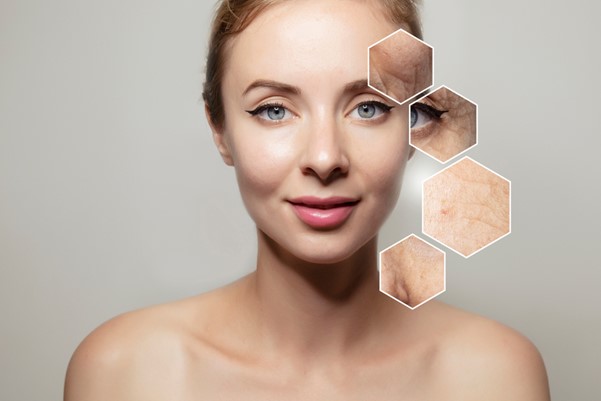
Under eye wrinkles form because periorbital skin is the thinnest on the face. The skin under the eyes is about half a millimeter thick. Collagen and elastin loss accelerates visible creasing in this area above all others.
The 3 treatment approaches are skin strengthening, muscle relaxation, and volume restoration. This article covers every cause, every clinical treatment, and every at-home option. All information comes from peer-reviewed dermatological studies and clinical trial data.
What Causes Under Eye Wrinkles?
There are 2 root categories of under eye wrinkle causes: internal and external.
Internal causes include: collagen production, skin elasticity, hormonal changes
- Progressive collagen and elastin loss, starting from age 25
- Genetics, which determines how early wrinkles form and how deep they go
- Hormonal changes, particularly during menopause
External causes include: UV damage, photoaging, oxidative stress
- UV radiation, responsible for up to 80% of visible facial aging
- Smoking, which restricts blood flow to skin cells and breaks down collagen
- Poor sleep, which interrupts the skin’s overnight repair cycle
- Dehydration, which makes fine lines more visible at the surface
- Repetitive facial expressions, including squinting and smiling
- Environmental pollutants and oxidative stress
Dynamic vs. Static Under Eye Wrinkles
There are 2 types of periorbital wrinkles: dynamic and static.
- Dynamic wrinkles form from repeated facial movement. They appear during facial expression and disappear at rest. The orbicularis oculi muscle generates radial folds at the lateral canthus — these are crow’s feet lines.
- Static wrinkles remain visible even when the face is fully relaxed. Collagen loss converts repeated dynamic wrinkles into permanent static creases. Static wrinkling favors the perioral region, neck, and malar areas.
Facial wrinkling falls into 4 stages on the Glogau Scale. Stage 1 has no visible wrinkles. Stage 4 has deep, widespread wrinkling. Dynamic wrinkles lead to static wrinkles, because collagen loss makes transient lines permanent.
SOURCE: European Journal of Molecular & Clinical Medicine 2021 — periorbital wrinkle classification
Why Do Under Eye Wrinkles Appear When Smiling?
Under eye wrinkles appear when smiling because the orbicularis oculi muscle creates radial folds at the outer eye corners. Mechanical pressure on this muscle generates concentric folds at the lateral canthus. Both zygomaticus major and minor muscles also activate during smiling. Their synergistic action accentuates periorbital wrinkling. With declining collagen, these dynamic lines become permanent static creases.
SOURCE: European Journal of Molecular & Clinical Medicine 2021 — orbicularis oculi, zygomaticus muscle mechanics
At What Age Do Under Eye Wrinkles Start?
Under eye wrinkles start forming from age 20 to 25. Collagen production decreases progressively from age 25 onward. The periorbital skin is the thinnest in the entire body. This thinness makes it the first area to reveal aging.
Under eye wrinkles are among the most common complaints in patients in their 20s and 30s. Sun damage, poor sleep, dehydration, and smoking all accelerate early periorbital aging. Protect the under-eye area daily, if early wrinkle formation is a concern.
SOURCE: Magnesium MN patch study, Samsung Medical Center — “Under-eye wrinkles, which are the first sign of aging, are the most common complaints of patients, even those in their 20s and 30s”
How to Remove Under Eye Wrinkles at Home
There are 4 clinically supported topical ingredients for under eye wrinkle reduction. They are retinoids, hyaluronic acid, vitamin C, and peptides.
Retinoids: The Most Effective Topical Option
Retinoids are the cornerstone topical treatment for photodamaged periorbital skin. They increase collagen production, thicken the epidermis, and improve skin texture. Retinaldehyde reduces fine lines and skin roughness more effectively compared to retinoic acid. Retinol 1.6% produces less redness and irritation compared to 0.025% retinoic acid, while matching its collagen-stimulating effects.
SOURCE: European Journal of Molecular & Clinical Medicine 2021 — retinoid evidence summary
Use a retinoid eye cream for 6 to 9 months for significant results. Start with retinol 2 to 3 nights per week. Increase frequency, if the skin tolerates it without irritation.
Hyaluronic Acid for Under Eye Fine Lines
Hyaluronic acid is a glycosaminoglycan that binds water and plumps periorbital skin from within. It remains bound to water until the body fully degrades it. This makes it one of the most effective volume-restoring molecules in topical skincare.
Apply a hyaluronic acid serum twice daily, morning and evening. It draws water into the under-eye area and immediately reduces the visible depth of fine lines. Pair it with a physical sunscreen to prevent UV-driven collagen loss.
SOURCE: European Journal of Molecular & Clinical Medicine 2021 — “it is a molecule that binds water very avidly and remains bound to it until it is degraded”
Which Vitamin Is Best for Under Eye Wrinkles?
There are 3 vitamins that target under eye wrinkles directly. They are vitamin A, vitamin C, and vitamin E.
- Vitamin A (retinoids): The most clinically validated option. Stimulates collagen synthesis and thickens the dermis.
- Vitamin C: Prevents collagen degradation from free radical damage. Softens fine lines and supports skin brightness.
- Vitamin E: Protects against UV-induced collagen breakdown. Most effective when paired with vitamin C.
Vitamin A deficiency allows collagen turnover to slow significantly. This accelerates periorbital wrinkle depth and skin laxity.
Peptides and Antioxidant Eye Creams
Peptides are amino acid chains that restore periorbital skin elasticity without the irritation of retinoids. They are the best option for sensitive skin around the eyes. Use peptide eye creams alongside retinoids, if skin sensitivity limits retinoid use. Antioxidant serums with vitamin C and E prevent further free radical damage to periorbital collagen.
Combine 4 active ingredients in the daily under-eye routine. Use retinoids, hyaluronic acid, vitamin C, and SPF formulated for the periorbital area.
Lifestyle Changes That Prevent Under Eye Wrinkles
There are 5 lifestyle changes that slow under eye wrinkle progression. They are UV protection, daily hydration, back-sleeping, a nutrient-rich diet, and quitting smoking.
- Apply broad-spectrum SPF every day. UV radiation drives up to 80% of visible facial aging. Wear UV-blocking sunglasses to reduce squinting lines.
- Stay hydrated throughout the day. Dehydrated skin shows fine lines more clearly. Drink water consistently and use a hydrating eye cream morning and night.
- Sleep 7 to 9 hours per night on your back. Side and stomach sleeping presses the face into a pillow and creates pressure lines. Use a silk pillowcase to reduce skin friction.
- Eat foods rich in vitamins C, E, and omega-3 fatty acids. Include berries, leafy greens, salmon, and walnuts. These support dermal collagen synthesis from within.
- Quit smoking. Smoking restricts blood flow to skin cells, reduces collagen production, and degrades elastin.
SOURCE: Cascade Eye & Skin, Heartland Eye
Can You Reverse Under Eye Wrinkles Naturally?
Fine under eye wrinkles improve with 6 to 9 months of consistent retinoid and vitamin C use. Deep static wrinkles do not resolve without clinical treatment.
Wrinkles do not disappear on their own once collagen and elastin are lost. Their appearance improves with consistent topical care. Clinical treatments produce faster and more significant improvements for established periorbital rhytids.
SOURCE: Vezeeta “Once under-eye wrinkles form due to collagen loss and reduced skin elasticity, they don’t disappear on their own”
How to Rebuild Collagen Under the Eyes
Rebuild collagen under the eyes with retinoids, vitamin C, microneedling, and dietary omega-3 fatty acids. These 4 approaches activate different collagen repair pathways.
There are 4 evidence-based methods for periorbital collagen rebuilding:
- Retinoids: Stimulate fibroblast collagen synthesis directly in the dermis. Both retinaldehyde and retinol produce measurable collagen increases with consistent use.
- Vitamin C: Prevents oxidative collagen degradation. Works most effectively when combined with retinoids.
- Microneedling: Creates controlled micro-injuries that initiate the wound healing cascade. New collagen forms as the skin repairs each micro-channel.
- Diet: Omega-3 fatty acids, zinc, and selenium support collagen formation at the cellular level. Include salmon, walnuts, and flaxseed in the daily diet.
SOURCE: European Journal of Molecular & Clinical Medicine 2021 — retinoid collagen evidence; Magnesium MN clinical paper — microneedling and wound healing cascade
Best Clinical Treatments for Under Eye Wrinkles
There are 7 clinical treatments for under eye wrinkles. They are Botox, dermal fillers, laser resurfacing, microneedling, chemical peels, radiofrequency, and blepharoplasty.
Botox for Under Eye Wrinkles
Botox (Botulinum Toxin Type A) for under eye wrinkles relaxes the orbicularis oculi muscle and reduces dynamic crow’s feet. Botulinum toxin type A inhibits acetylcholine release at the presynaptic nerve ending. This produces reversible, long-acting muscle denervation and visible line reduction.
Brand options include Botox, Dysport, Nabota and Liztox. Results appear within 3 to 4 days of treatment. Effects last 3 to 4 months. Most eye area treatments require 20 to 30 units. Cost ranges from $10 to $20 per unit.
Botox treats dynamic wrinkles, not static wrinkles. Combine Botox with fillers or laser for comprehensive periorbital rejuvenation.
SOURCE: Zwivel “most people see significant results just three to four days following a Botox treatment, and experience a significant reduction in the appearance of wrinkles for three to four months”
Dermal Fillers for Under Eye Wrinkles
Hyaluronic acid fillers restore periorbital volume and smooth deep under eye wrinkles. Common injection sites are the brow, upper eyelid, and tear trough. Hyaluronic acid binds water and maintains facial volume until fully degraded by the body.
Inject the midface area first, then treat the periorbital region. This approach reduces the total filler volume needed in the under-eye area. Common side effects are bruising, redness, and mild swelling. A rare but serious complication is vision loss from ophthalmic artery occlusion. Results last 6 to 24 months depending on the product used.
Brand include Sheereyes PN, Rejuran (i) eye.
SOURCE: European Journal of Molecular & Clinical Medicine 2021 — “if the midface area is going to be injected, it should be targeted prior to the treatment of the periorbital area”; “the ophthalmic artery can get affected, leading to permanent loss of vision”
Laser Resurfacing for Under Eye Wrinkles
There are 2 laser categories for periorbital wrinkle treatment: ablative and nonablative.
Ablative lasers produce the highest collagen tightening but carry more downtime:
- CO2 laser targets deep periorbital wrinkles with significant tissue remodeling and collagen contraction
- Er:YAG laser (wavelength 2940nm) targets superficial wrinkles with less heat formation and faster recovery
- Both CO2 and Er:YAG lasers produce equal results for periorbital rhytids at all depths
- Ablative lasers are best suited to lighter skin types
- Cost ranges from $1,000 to $3,000 per session
SOURCE: European Journal of Molecular & Clinical Medicine 2021 — “Er: YAG laser penetrates tissues more superficially compared to the CO2 laser, and also leads to less heat formation”; “both lasers have been found to be equally effective in the treatment of both superficial and deep rhytids”
Nonablative lasers carry a safer profile and lower downtime for all skin types:
- Fractionated 1550nm erbium-doped fiber laser improves eyelid tightening with no major side effects
- 1410nm nonablative laser improves periorbital skin flexibility and wrinkle depth
- 1927nm Thulium fiber laser increases collagen and reduces melanin simultaneously
- Nonablative options increase in use, because of their safety profile and minimal recovery time
SOURCE: European Journal of Molecular & Clinical Medicine 2021 — clinical evidence summary for nonablative periorbital lasers
Microneedling for Under Eye Wrinkles
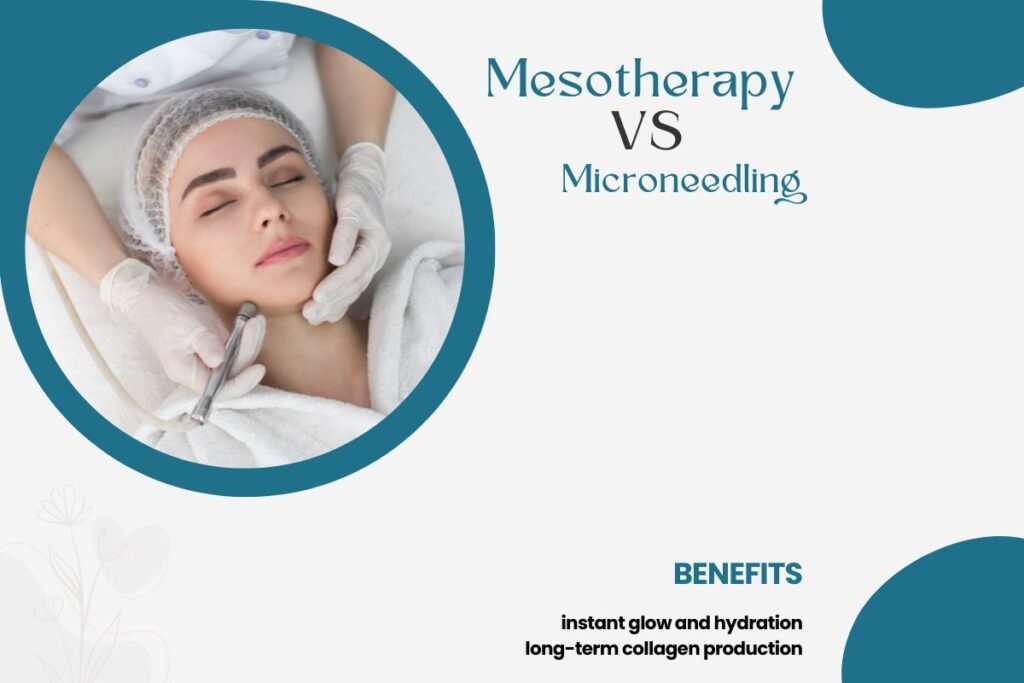
Microneedling stimulates periorbital collagen repair through controlled micro-injuries to the epidermis and dermis. The skin responds by initiating the wound healing cascade — producing new collagen, growth factors, and inflammatory mediators that rebuild dermal structure.
Magnesium microneedle (Mg MN) patches are an effective at-home device option. A 12-week prospective study at Samsung Medical Center enrolled 19 subjects aged 27 to 58. Subjects applied Mg MN patches every other night for 1 to 2 hours. Wrinkle grade showed statistically significant improvement at week 8 (p = 0.008). Wrinkle index improvement was statistically significant on the right under-eye at week 12 (p = 0.019).
Magnesium ions increase skin hydration, strengthen the skin barrier, and stimulate keratinocyte proliferation. These properties provide additional benefit beyond mechanical needling alone.
Combine microneedling with platelet-rich plasma (PRP) for enhanced collagen stimulation. RF microneedling is safe for treatment over the upper and lower eyelids. Clinical microneedles are 0.5 to 3.0mm in length. Home devices under 0.5mm do not induce bleeding or severe skin injury.
SOURCE: Jang D et al. Magnesium microneedle patches for under-eye wrinkles. Dermatologic Therapy. 2022;35:e15732 — study results, Samsung Medical Center, Sungkyunkwan University
Chemical Peels for Under Eye Wrinkles
Chemical peels exfoliate the periorbital epidermis and stimulate collagen production through controlled chemical resurfacing. The most commonly used AHAs are glycolic acid 20% and lactic acid 15%.
TCA (Trichloroacetic Acid) peel reduces dark circles by up to 90%. The formula combines 3.75% trichloroacetic acid and 15% lactic acid. Phenol-croton oil segmental peels treat deep periorbital wrinkles with long-lasting collagen stimulation. This cost-effective approach produces sustained neocollagenesis with no cardiac monitoring required for 1 to 2 facial units.
Chemical peels work best for lighter skin types. The American Society for Dermatologic Surgery recommends caution for darker skin tones. Cost ranges from $150 for superficial peels to several thousand dollars for deep peels.
SOURCE: European Journal of Molecular & Clinical Medicine 2021 — “Vavouli et al reported an improvement of up to 90% in dark circles following treatment with 3.75% trichloroacetic acid and 15% lactic acid”; phenol-croton oil peel evidence
Radiofrequency for Under Eye Wrinkles
Radiofrequency devices heat the periorbital dermis and stimulate collagen remodeling without damaging the skin surface. RF energy affects deeper tissue layers compared to laser-based methods. This makes it uniquely suited to the thin periorbital skin.
Fractional RF achieves sublative rejuvenation — deep collagen remodeling below the epidermis with minimal surface disruption. Micro-plasma RF creates controlled epidermal perforations. These trigger collagen repair with less downtime compared to ablative laser. Micro-plasma RF produces rapid re-epithelialization and reduced healing time.
RF suits all skin types. It is the best non-laser option for darker skin tones that are not candidates for ablative resurfacing.
SOURCE: European Journal of Molecular & Clinical Medicine 2021 — “affects deeper tissue layers than laser-based methods”; “sublative rejuvenation because the skin remodeling occurs deep below the minimal epidermal ablation”; micro-plasma RF mechanism
Blepharoplasty for Under Eye Bags and Wrinkles
Transconjunctival blepharoplasty removes prolapsed orbital fat from inside the eyelid without an external incision. This approach preserves the anatomical structures that support the lower eyelid. The orbicularis oculi muscle and lateral canthal tendon remain intact. Recovery allows return to work within one week.
Transcutaneous blepharoplasty involves external skin removal. It carries high risk of lower eyelid retraction, skin shortage, and ectropion. Surgeons who operate through an external incision compromise the layered support structures of the lower eyelid. Combine transconjunctival blepharoplasty with fractional CO2 or Er:YAG (Erbium-doped Yttrium Aluminum Garnet) laser plus PRP for wrinkle reduction without skin removal.
Blepharoplasty addresses under eye bags, not wrinkle texture alone. Skin quality — improved with laser, RF, or microneedling — is more important than skin removal.
SOURCE: Prasad Cosmetic Surgery competitor source — transconjunctival vs transcutaneous blepharoplasty clinical analysis
Under Eye Wrinkles vs. Eye Bags: What Is the Difference?
Under eye wrinkles are surface skin creases. Eye bags are swollen orbital fat pockets that protrude beneath the lower eyelids.
There are 2 structural differences:
- Under eye wrinkles result from collagen loss, skin thinning, and repetitive facial movement. They exist within the skin layer.
- Eye bags result from prolapsed inferior orbital fat pads. They produce a puffy, bulging appearance below the orbital rim.
Treatments differ. Retinoids, Botox, and lasers address wrinkles. Blepharoplasty and structural fillers address fat prolapse and volume loss. Both conditions often appear together, and both need separate treatment strategies.
Deep Under Eye Wrinkles vs. Fine Lines: How to Tell the Difference
There are 3 Fitzpatrick periorbital wrinkle classes used to guide treatment selection:
- Class I (score 1–3): Fine wrinkles with mild elastosis and subtle textural changes. Responds to topical retinoids, hyaluronic acid, and nonablative laser.
- Class II (score 4–6): Fine to moderate wrinkles with distinct papular elastosis. Responds to Botox, chemical peels, and fractional laser.
- Class III (score 7–9): Fine to deep wrinkles with severe elastosis and redundant skin. Requires ablative CO2 laser, deep peels, or blepharoplasty.
SOURCE: European Journal of Molecular & Clinical Medicine 2021 — Fitzpatrick periorbital classification Table 1
Class I and II wrinkles respond to topical care and nonablative clinical treatment. Class III wrinkles require ablative or surgical intervention for meaningful improvement.
How to Cover Under Eye Wrinkles with Makeup
There are 3 steps to cover under eye wrinkles with makeup without emphasizing texture:
- Apply a hydrating primer first. Primers fill fine lines and create a smooth canvas. Avoid matte or powder-first formulas — these settle into creases and make wrinkles more visible.
- Pat a lightweight creamy concealer. Use the ring finger to tap, not drag, product into the skin. Match the shade to the skin tone or go one shade lighter.
- Set sparingly with a translucent powder. Apply only to the outer corners where creasing is minimal. Over-powdering deepens the appearance of fine lines.
Choose concealers with hyaluronic acid, peptides, or light-diffusing particles. These create a smoother finish and hydrate the skin throughout the day.
Frequently Asked Questions About Under Eye Wrinkles
How do you get rid of wrinkles under your eyes?
Get rid of under eye wrinkles by combining retinoids, hyaluronic acid, daily SPF, and clinical treatments. Fine lines improve with consistent topical care. Deep wrinkles need Botox, laser, or fillers for meaningful reduction. Use retinoids for 6 to 9 months for significant visible results.
Can you reverse wrinkles under eyes naturally?
Fine under eye wrinkles improve with retinoid and vitamin C use over 6 to 9 months. Deep static wrinkles need clinical treatment. Natural methods alone do not eliminate established periorbital rhytids. Clinical treatments produce faster, deeper results.
Why do I suddenly have under eye wrinkles?
Sudden under eye wrinkles appear because of rapid collagen loss, increased UV exposure, dehydration, or eye-rubbing from allergies. Poor sleep, new stress, and hormonal changes are 3 additional triggers for sudden periorbital wrinkling.
What do dermatologists recommend for eye wrinkles?
Dermatologists recommend a 3-part protocol: retinoids to strengthen skin, Botox to relax muscles, and laser or fillers to restore volume. Daily SPF and hyaluronic acid eye cream support long-term management of periorbital aging.
What tightens skin under the eyes?
Radiofrequency, fractional laser, RF microneedling, and topical retinoids tighten periorbital skin by stimulating collagen remodeling. RF works for all skin types. Ablative lasers produce stronger results for lighter skin tones with deeper wrinkles.
Which vitamin is best for under eye wrinkles?
Vitamin A (retinoids) is the most clinically effective vitamin for reducing under eye wrinkles. Vitamin C prevents collagen breakdown. And Vitamin E protects against UV damage. Use all 3 in combination for best periorbital results.