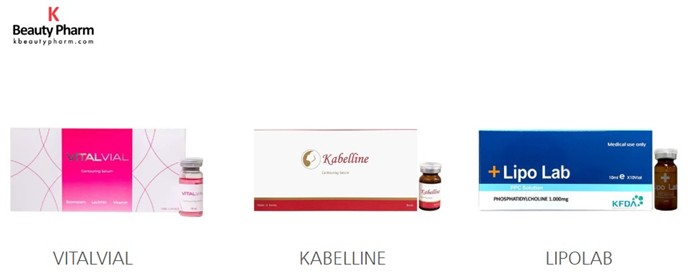
Top 5 Reasons CaHA Fillers Last Longer Than Other Dermal Fillers

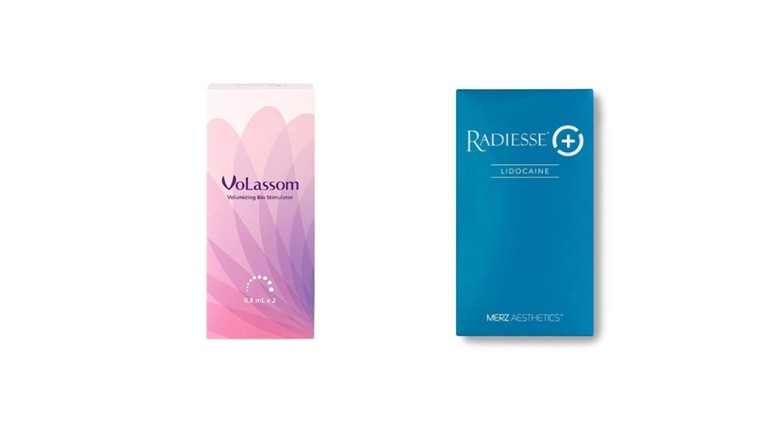
When achieving long-lasting facial rejuvenation without surgery, not all dermal fillers are created equal. While hyaluronic acid (HA) fillers like Juvederm and Restylane have long dominated the aesthetic world, Calcium Hydroxylapatite (CaHA) fillers—such as Radiesse and the newer Volassom- have risen in popularity for their exceptional durability and skin-regenerating properties.
So, what exactly makes CaHA fillers stand out? In this article, we’ll explore the top five reasons CaHA-based products deliver longer-lasting and more transformative results than their HA counterparts.
Quick Comparison: CaHA vs. HA Fillers
| Feature | CaHA Fillers (e.g., Volassom) | HA Fillers (e.g., Revolax) |
| Primary Action | Biostimulator: Triggers natural Collagen growth. | Volumizer: Uses water-binding gel for volume. |
| Longevity | 12–18 months (up to 24). | 6–12 months on average. |
| Reversibility | Non-Reversible: Breaks down naturally. | Reversible: Can be dissolved with enzymes. |
| “Pillow Face” Risk | Low: Does not attract excess water. | Moderate: High water retention. |
| Ideal Areas | Jawline, Cheeks, Chin, and Skin Tightening. | Lips, Tear Troughs, and Fine Lines. |
CaHA Fillers
CaHA fillers are injectable treatments that contain calcium hydroxylapatite particles dispersed within a smooth gel base. This compound closely resembles the minerals found in our bones and teeth, making it highly biocompatible.
Unlike hyaluronic acid fillers that primarily add volume and hydration, CaHA fillers stimulate collagen production, offering both immediate and long-term skin improvement. Radiesse is the most established CaHA filler, FDA-approved for use in facial contouring and hand rejuvenation. Volassom, a more recent entry, is designed for even smoother integration and regenerative results.
Volassom vs. Radiesse: A Technical Comparison
While both are CaHA biostimulators, Volassom (developed by CGBio Inc.) introduces Lattice-Pore microsphere technology. Unlike the solid microspheres used in legacy products like Radiesse, Volassom’s particles have a patented, porous internal framework.
The Clinical Benefit: Instead of breaking down from the outside-in, Volassom’s lattice-pore structure degrades layer-by-layer. This supports a more consistent collagen stimulation signal over the product’s lifespan and reduces the risk of filler migration in mobile facial areas.
Additionally, Volassom is formulated for a low injection force of 21N, giving practitioners superior tactile control and ensuring the product distributes evenly across the treated tissue plane.
1. Collagen Stimulation for Long-Term Benefits
One of the most powerful advantages of CaHA fillers is their ability to stimulate collagen production in the skin. The microspheres in products like Radiesse and Volassom activate fibroblasts, which in turn boost the natural production of Type I collagen—the type responsible for firm, youthful skin.
As the initial filler gel is gradually absorbed, the skin continues to renew itself from the inside through ongoing collagen production. Over time, the treated areas appear naturally plumper, firmer, and more lifted without relying on the presence of foreign material.
With repeated treatments, patients can achieve cumulative effects, making CaHA fillers ideal for those seeking skin regeneration along with volume enhancement. In contrast, HA fillers do not have biostimulatory properties and are gradually broken down without any added regenerative benefit.
2. Stable Microsphere Structure for Slow Breakdown
Another key reason CaHA fillers last longer is their dense and stable microsphere composition. These tiny calcium-based particles degrade much more slowly than the sugar molecules found in hyaluronic acid fillers.
Radiesse, for example, uses a uniform microsphere size to provide structural integrity and controlled degradation over time. Volassom takes this a step further with even more refined particle technology, allowing for smoother integration into tissues while maintaining a slow and steady breakdown rate.
As a result, the filler maintains its lifting effect and shape longer than traditional HA products, many of which start to dissipate within 6–9 months. In comparison, CaHA fillers typically provide results that last between 12 to 18 months, and in certain individuals, effects may extend up to 2 years based on their metabolism and daily habits.
3. Superior Lifting Power and Tissue Integration
CaHA fillers are known for their exceptional structural support, which makes them ideal for deep tissue augmentation. Because of their firmness and cohesive nature, CaHA products can provide a “scaffolding” effect that lifts and supports sagging skin.
This is particularly effective in areas like:
- Jawline and chin (for definition)
- Cheeks and temples (for volume loss)
- Nasolabial folds and marionette lines (for smoothing)
Volassom is engineered for excellent tissue compatibility, ensuring even distribution and minimizing lumpiness or irregularities. Radiesse, on the other hand, is favored by professionals for its predictable lift and high G-prime (firmness).
This ability to physically lift tissue and stay in place contributes to the extended duration of results. While HA fillers may migrate or flatten over time, CaHA stays anchored, preserving facial contour for months longer.
“While CaHA is a powerhouse for lifting, how you use it matters. A 2025 clinical trial (Germani et al.) highlighted that manually mixing HA and CaHA can actually reduce volume retention compared to using pure fillers. For the best results in areas like the temples or jawline, using a dedicated, high-tech CaHA biostimulator like Volassom on its own—or following professional premixed protocols—is superior to ‘DIY’ clinic mixing.”
4. Dual Action: Immediate Results + Progressive Improvement
CaHA fillers offer a two-phase benefit:
- Instant volume correction due to the gel carrier
- Progressive enhancement of skin texture as collagen production increases
Patients walk away from their appointment with visible enhancement, but the best results unfold gradually over the next few weeks. The skin becomes smoother, tighter, and more elastic as new collagen fibers form around the CaHA microspheres.
Volassom, in particular, is designed for progressive collagen remodeling while maintaining a soft, natural appearance.
A 2025 prospective study (Hong and Park) at Chung-Ang University confirmed this dual-action. Testing Volassom over 24 weeks, researchers found significant improvements not just in volume, but in skin barrier function (TEWL) and hydration. This makes Volassom one of the few CaHA products with dedicated clinical evidence proving it functions as both a volumizer and a skin-quality improver.
Radiesse follows a similar pattern: initial fullness followed by long-term improvements in skin density and tone.
This dual mechanism allows CaHA fillers to outlast HA fillers, which typically provide only immediate hydration and volume without influencing the skin’s natural structure.
5. Resistant to Enzymatic Breakdown
Unlike HA fillers, which are vulnerable to rapid degradation by the body’s hyaluronidase enzymes, CaHA fillers are composed of a mineral-based compound that is much more resistant to breakdown.
The calcium hydroxylapatite microspheres in Radiesse and Volassom mimic natural bone minerals, making them less likely to be absorbed quickly by the body. This ensures the filler maintains its shape and effect longer, especially in high-movement areas like the jawline and chin.
Additionally, CaHA fillers are metabolized gradually by macrophages, allowing for a slow and steady absorption that matches the pace of collagen regeneration. This prolonged metabolic breakdown means fewer touch-ups are needed, making CaHA a cost-effective choice in the long run.
How Long Do Radiesse and Volassom Last?
- Radiesse: Provides noticeable results for around 12 to 18 months, and in some cases, the effects may even extend up to two years. Its robust lifting power makes it ideal for facial contouring and hand rejuvenation.
- Volassom: Delivers similar long-lasting results while providing a smoother, more elegant outcome, making it ideal for treating finer, more sensitive facial areas. Its collagen-boosting effects also last up to 12–18 months, with continued improvement in skin texture over time.
Longevity can vary depending on:
- Injection technique
- Treated area
- Individual metabolism
- Lifestyle (smoking, sun exposure, skincare)
Is CaHA Right for You?
If you’re looking for a filler that offers instant results, long-lasting volume, and collagen stimulation, then a CaHA-based product like Radiesse or Volassom might be your best option.
They’re especially recommended for:
- Deep facial folds and volume loss
- Jawline contouring
- Chin projection
- Hand rejuvenation
- Full-face biostimulation
However, they may not be suitable for areas needing soft, subtle movement, like the lips or tear troughs—HA fillers are still better suited there.
To ensure the best results, get personalized advice from a trained aesthetic practitioner on which filler suits you.
Choosing the Right Tool: Volassom or Radiesse?
- Radiesse: Best for high-structural projection, such as heavy jawline definition or FDA-cleared hand rejuvenation where maximum resistance is needed.
- Volassom: Superior for smooth tissue integration. Its uniform 30-micron microspheres make it the ideal choice for the temples, forehead, and neck—or for patients in the early stages of volume loss who want skin quality enhancement without a “stiff” look.
Note: Volassom is manufactured by CGBio, a leader in bone graft technology with 24 patents in the US and Korea. It is packaged as 0.8 mL × 2 sterile syringes, allowing for precise, distributed treatment.
CaHA Filler FAQ: Expert Answers for Better Results
What is a CaHA filler, and how does it work?
CaHA stands for Calcium Hydroxylapatite—a mineral-based filler made of tiny microspheres suspended in a gel carrier. Unlike standard fillers, it has a dual-action effect: the gel provides immediate volume, while the microspheres act as a “scaffold” that triggers your body to produce its own natural Type I collagen and elastin over 2–3 months.
What is “Hyperdiluted” CaHA, and why is it used?
Practitioners use hyperdilution to thin filler with sterile saline before injection. In this ‘skin booster’ mode, the filler provides no additional volume; instead, practitioners spread it across larger areas, such as the neck, décolletage, or tops of hands. This is the gold standard for non-surgical skin tightening and fixing “crepey” skin texture without making the area look bulky.
How should I prepare for my treatment? (Pre-Care)
To minimize the risk of bruising and swelling, you should avoid blood-thinning medications and supplements—such as Aspirin, Ibuprofen (NSAIDs), Vitamin E, Fish Oil, and Alcohol—for at least 3–7 days before your appointment. Always consult your doctor before stopping prescribed medications.
How is CaHA different from Hyaluronic Acid (HA) fillers?
HA fillers (like Revolax or Neuramis) add volume by holding water and are reversible with an enzyme. CaHA fillers (like Volassom) are biostimulators that build your skin’s structure. CaHA fillers provide results that last significantly longer (12–18 months) and offer a firmer ‘lift.’ However, practitioners cannot dissolve these fillers with enzymes.
Can CaHA fillers be used for a Non-Surgical Nose Job?
While some advanced injectors use CaHA for the nose, safety guidelines generally discourage this practice. Because the nose contains high-risk vascular zones and practitioners cannot dissolve CaHA, they prefer HA fillers for nasal contouring.
Are there any downsides or side effects?
Common side effects include temporary swelling, redness, and bruising. Because CaHA is a firm, opaque white material, it is not suitable for the lips or under the eyes (tear troughs), as it can cause visible white nodules if placed too close to the surface. Additionally, clinicians must avoid using CaHA fillers on patients with active infections or calcium metabolism disorders, as these conditions pose significant safety risks.
Is CaHA filler permanent?
No. CaHA is fully biodegradable. Your body’s natural processes (macrophages) gradually break down and clear the microspheres over 12–24 months. While the filler disappears, the natural collagen your body built during that time remains, helping your skin age more gracefully.
Conclusion
CaHA fillers like Radiesse and Volassom are not just about volume—they’re about true facial regeneration. By stimulating collagen, offering superior lift, and resisting early breakdown, these advanced fillers deliver results that last longer, look more natural, and age beautifully over time. Please consult with a medical professional for detail advice.
References:
- Hong, J. Y., et al. (2025). “Dual Benefits of Calcium Hydroxyapatite Filler: A Prospective Study on Midface Volume Restoration and Skin Quality Enhancement.” Journal of Cosmetic Dermatology. Link to Pubmed
- Germani, R., et al. (2025). “Global Recommendations for Facial Rejuvenation Using a Hyaluronic Acid and Calcium Hydroxyapatite Hybrid Injectable.” Link to PMC