Lip Filler: Complete Guide to Cost, Types Results & Aftercare (2026)

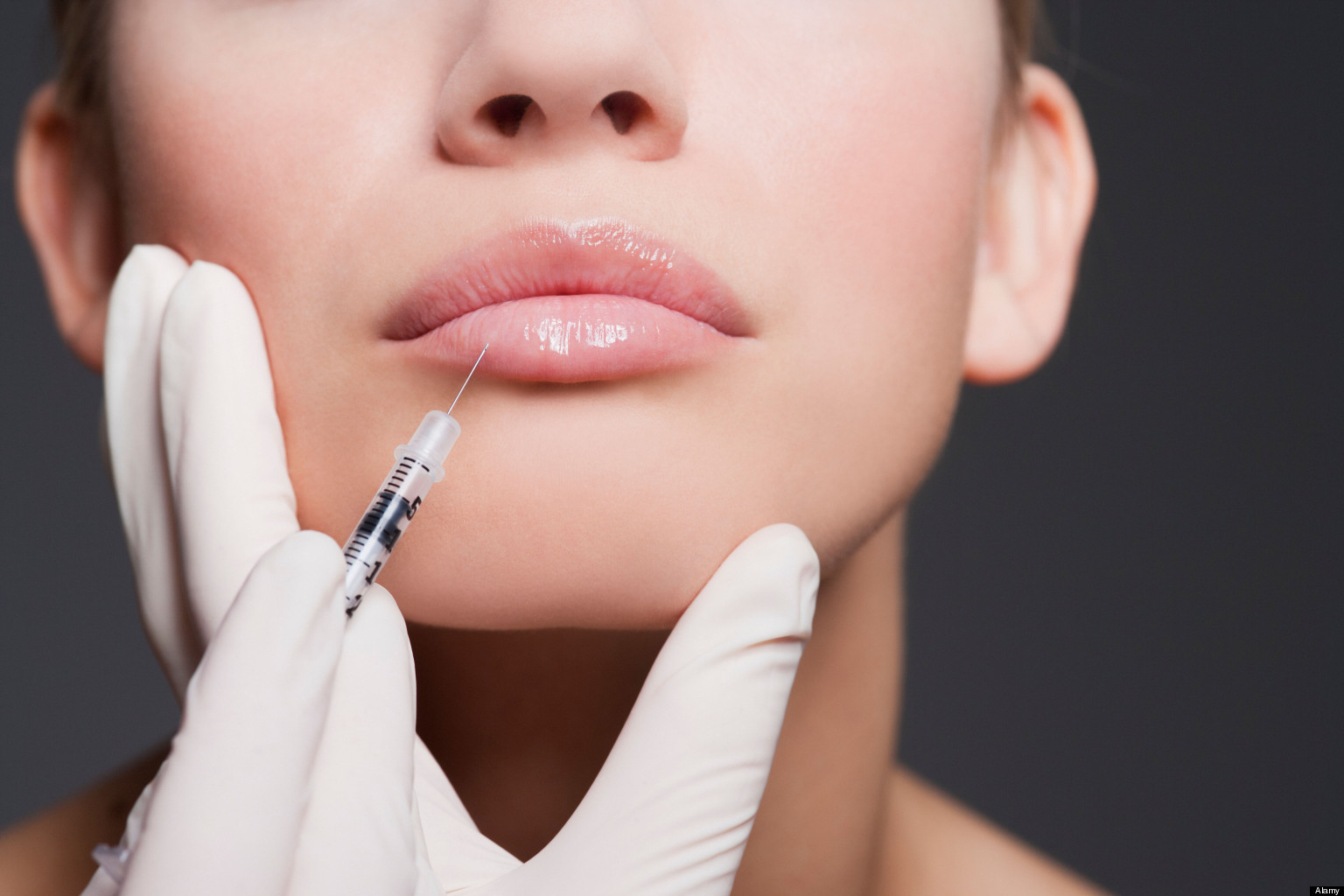
Lip fillers are injectable treatments used to add volume, improve shape, and enhance the definition of the lips. They are one of the most requested non-surgical cosmetic procedures in the United States, and for good reason: results are visible immediately, the procedure takes under 30 minutes, and — unlike surgery — the effects are reversible.
The vast majority of lip fillers used today are based on hyaluronic acid (HA), a sugar molecule that occurs naturally in the human body. Biocompatible HA-based fillers — including brands such as Revolax, Rejeunesse, Neuramis, Dermalax, and Regenovue — integrate with the lip tissue to create a soft, natural-looking result while attracting moisture to keep lips hydrated.
This guide covers everything you need to know before your first treatment: how the different types of filler work, what results look like at 0.5ml versus 1ml, the real cost of treatment in the US, what the swelling timeline looks like day by day, how long results last, and the risks you should understand before booking an appointment.
1. What Are Lip Fillers? Types Explained
Lip fillers fall into two broad categories: temporary injectables and permanent surgical options. The overwhelming majority of treatments performed today use temporary HA-based injectables, which are preferred by clinicians and patients alike because of their excellent safety profile and reversibility.
Hyaluronic Acid (HA) Fillers — The Gold Standard
Hyaluronic acid is a polysaccharide that exists naturally throughout the human body — in skin, connective tissue, and synovial fluid. When purified and cross-linked into a gel, it can be injected into the lips to add volume and definition. Because HA is biocompatible, the risk of allergic reaction is very low. HA fillers can also be dissolved rapidly using an enzyme called hyaluronidase, which makes them fully reversible — a significant safety advantage.
HA fillers come in different densities, which crrespond to different treatment applications:
| Filler Grade | HA Density / Viscosity | Best For | Example Products |
| Fine | Low — flows easily | Subtle volume, lip hydration, fine border definition | Revolax Fine, Neuramis Lidocaine, Rejeunesse Fine, Regenovue Fine Plus, Elasty F Plus |
| Deep | Medium — firmer gel | Noticeable volume increase, mid-lip body, natural enhancement | Revolax Deep, Dermalax Deep Plus, Rejeunesse Deep, Regenovue Deep Plus, Elasty D Plus |
| Shape / Sub-Q | High — structural support | Russian lips technique, strong cupid’s bow definition, significant projection | Rejeunesse Shape, Regenovue Sub-Q Plus, Dermalax Implant Plus, EPTQ S500, Revolax SubQ |
All HA fillers listed in this guide are KFDA-approved (Korean Food and Drug Administration) products used by aesthetic practitioners globally. Many contain lidocaine — a local anaesthetic — blended into the gel to improve patient comfort during injection. Products with lidocaine in the formula include the Neuramis Lidocaine, Revolax, Rejeunesse, and EPTQ series.
Biostimulators — An Alternative to Traditional Fillers
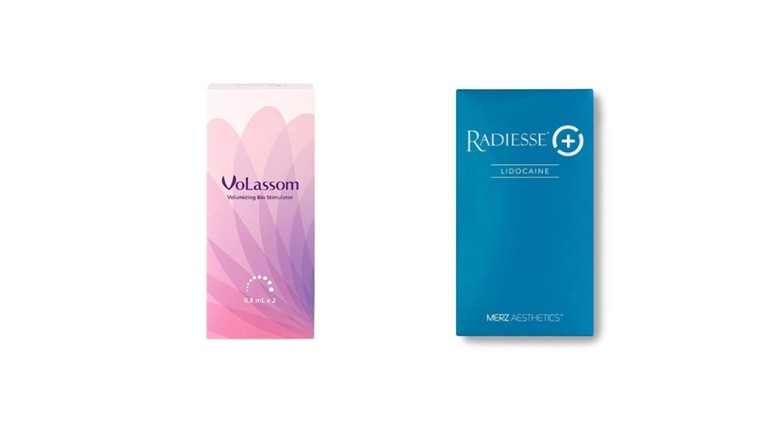
Biostimulators such as Volassom work differently from HA fillers. Rather than adding immediate physical volume, they stimulate the body’s own collagen and elastin production over time. They are suited to clients who want gradual, natural improvement rather than instant volume — and may appeal to those moving away from traditional HA fillers.
Other Types of Lip Augmentation (For Reference)
- Collagen-based fillers — older generation fillers that last around 3 months; rarely used today.
- Fat grafting (fat transfer) — a surgical procedure harvesting fat from the patient’s own body and injecting it into the lips for longer-lasting results. Recovery is more involved than HA injections.
- Lip implants — a permanent surgical option using silicone or synthetic implants. Higher risk profile than injectables.
- Lip lift — a surgical procedure that removes skin between the nose and upper lip to permanently raise the lip line. Not the same as filler.
2. How Much Does Lip Filler Cost?
Cost is one of the top concerns for first-time clients. Here is what the data shows.
US Lip Filler Cost at a Glance (2026)
- National Average: $750 – $1,100 per syringe.
- The “Micro-dose” (0.5ml): $350– $600.
- Tiered Pricing: In 2026, many premium clinics have moved away from “flat-fee” syringes. You are now paying for the injector’s expertise and safety protocols. Expect to pay a 20-30% premium for Board-Certified dermatologists or plastic surgeons compared to medical spas.
What Makes the Price Go Up or Down?
| Factor | How It Affects Price |
| Geographic location | Major metros (NYC, Miami, LA, Chicago) charge significantly more than smaller markets. |
| Provider credentials | Board-certified plastic surgeons and dermatologists charge more than registered nurses or aestheticians. More experience typically means safer technique. |
| Volume of filler | Most clinics price per syringe (0.5ml or 1ml). A half syringe costs less than a full syringe; two syringes cost more than one. |
| Product brand | Premium branded fillers (e.g. Juvederm) are priced higher at point of care than equivalent KFDA-approved HA fillers. Both are HA-based; cost differences reflect branding and marketing, not necessarily superior outcomes. |
| Touch-up appointments | Maintenance appointments every 6–18 months add to the total annual cost of keeping the result. |
Half Syringe vs. Full Syringe — Which Should You Start With?
First-time clients frequently looking for guidance on “How much filler to start with”. A 0.5ml (half syringe) is the standard recommendation for a first appointment.
It provides a noticeable but natural-looking enhancement, allows you to gauge how your lips respond, and can be followed with an additional 0.5ml at a later appointment if you want more volume.
A full 1ml syringe delivers a more pronounced result and is appropriate for clients with very thin lips or those who want a significant enhancement from the outset.
3. Lip Filler Shapes and Techniques
Lip filler is not a one-size-fits-all treatment. The result depends on the technique used, the product selected, and the anatomy of your lips. Here are the most requested shapes and the approaches used to achieve them.
Natural Enhancement
The most requested result — especially for first-time clients. The goal is a subtle increase in volume that looks as though the lips have always been that way.
Injections are distributed evenly throughout both lips, with attention to maintaining the natural shape. A Fine or standard-density HA filler (such as Revolax Fine, Neuramis Lidocaine, or Rejeunesse Fine) is typically chosen for this result. Starting volume: 0.5ml.
Russian Lips Technique
The Russian technique involves placing filler more centrally — focusing on height and projecting the cupid’s bow forward — rather than adding lateral fullness and outward projection as a traditional technique does.
The result is a heart-shaped, doll-like lip with a prominent cupid’s bow and flattened lower lip. This technique requires an experienced injector and is typically performed with a mid-to-high-density HA filler (such as Rejeunesse Deep, Regenovue Deep Plus, or Rejeunesse Shape).
Cupid’s Bow Definition
Targets the vermillion border — the defined M-shaped edge of the upper lip. Filler is placed precisely along this border to make the cupid’s bow more prominent. Suitable for clients who want definition rather than volume. Requires a Fine-grade filler and precise technique.
Keyhole Pout
A subtle technique that leaves a small central gap in the closed upper lip, creating the impression of naturally full lips with depth. Very popular for photographic results. Achieved with careful central placement of a Fine or mid-density HA filler.
Lip Filler for Thin Lips
Thin lips benefit from a structured approach: first establishing the border definition with a Fine-grade product, then adding central body volume with a mid-density product such as Revolax Deep, Dermalax Deep Plus, or Regenovue Deep Plus. Starting with a full 1ml syringe is often recommended for thin lips where 0.5ml may produce minimal visible change.
4. Lip Filler vs. Lip Flip — What Is the Difference?
| Lip Filler | Lip Flip | |
| What it is | Hyaluronic acid gel injected into the lip tissue to add physical volume. | Botox (or a similar neuromodulator) injected into the muscle around the upper lip to relax it, causing the lip to gently roll outward. |
| Result | Visibly fuller, more projected lips. | Slightly more upper lip show — subtle. No volume added. |
| Volume change | Yes — significant to dramatic depending on amount used. | No — only changes the curl/flip of the lip, not the size. |
| Duration | 6 to 18 months for HA fillers. | Approximately 2 to 4 months for Botox-based lip flip. |
| Reversible? | Yes — dissolved with hyaluronidase. | Yes — wears off naturally. |
| Best for | Clients who want fuller, more defined lips. | Clients who want a subtle improvement without adding volume; often combined with filler. |
5. The Procedure: Step by Step
A standard lip filler appointment at a reputable clinic follows this sequence. Total time from arrival to walking out is typically 30 to 60 minutes, with the actual injection process taking 15 to 30 minutes.
- Consultation: Before any filler is administered, your provider will review your medical history, discuss your goals, and assess your lip anatomy. This is the time to mention any history of cold sores, autoimmune conditions, blood-thinning medications, or allergies. Do not skip this step.
- Topical numbing: A numbing cream is applied to the lips and left for 15 to 20 minutes. Most modern HA fillers — including the Neuramis, Revolax, Rejeunesse, and EPTQ series — also contain 0.3% lidocaine within the formula, providing additional anaesthetic effect during injection.
- Injection: The provider uses a fine needle or blunt-tipped cannula to place the filler at precise points within the lip tissue. For a standard enhancement this takes 15 to 30 minutes. You may feel pressure and mild discomfort; sharp pain is not expected.
- Assessment: The provider reviews symmetry and shape immediately after injection and may make minor adjustments. The lips will be swollen at this stage — this is the temporary post-injection appearance, not the final result.
- Aftercare briefing: You will receive aftercare instructions before leaving. A follow-up appointment is typically recommended at 2 weeks, once swelling has resolved, to assess the settled result.
6. Before Your Appointment: How to Prepare
Proper preparation reduces the risk of bruising, swelling, and complications. Follow these guidelines in the days before your treatment.
What to Avoid Before Treatment
- Alcohol — avoid for at least 24 hours before your appointment. Alcohol is a vasodilator and increases bleeding and bruising risk at injection sites.
- NSAIDs and aspirin — avoid ibuprofen, aspirin, and naproxen for 48 to 72 hours beforehand unless prescribed for a medical condition. These inhibit platelet function and increase bruising. Always consult your prescriber before stopping any prescribed medication.
- Vitamin E and omega-3 supplements — these have mild blood-thinning effects. Pause for 48 hours if possible.
- Lip products on the day — do not apply lipstick, gloss, balm, or any product to the lips on the day of treatment. These can introduce bacteria to injection sites.
- Intense exercise on the day — avoid strenuous physical activity immediately before your appointment, as elevated heart rate can increase bleeding.
Cold Sore History — An Important Consideration
If you have a history of cold sores (herpes simplex virus type 1), tell your provider before treatment. Needle trauma from lip injections can reactivate the herpes simplex virus and trigger a cold sore outbreak.
For patients with a history of cold sores, it is standard clinical practice in aesthetic medicine to prescribe a short prophylactic course of an antiviral medication — such as valacyclovir — around the time of treatment.
The specific dosage and duration are determined by your prescribing doctor based on your individual history. Do not self-prescribe antivirals. This information is widely acknowledged in aesthetic medicine guidelines and reflected in Google’s People Also Ask data for this topic.
Autoimmune Conditions
Having an autoimmune disease does not automatically disqualify you from receiving lip fillers, but it does require careful assessment.
If your condition is stable and well-controlled, many qualified practitioners will proceed, typically favouring HA fillers over permanent or semi-permanent materials because of their reversibility and biocompatibility.
Treatment is strongly discouraged during active flare-ups. Discuss your specific diagnosis, current medications (including immunosuppressants), and recent disease activity with both your treating physician and your aesthetic provider before booking.
This recommendation is supported by clinical guidance published by organisations including the Harley Academy and research published in the National Institutes of Health (NIH) PMC database.
7. How Long Do Lip Fillers Last?
HA lip fillers are temporary. Most patients see results lasting between 6 and 18 months, with the majority requiring a maintenance appointment every 6 to 12 months to keep their preferred look.
Factors That Affect Longevity
| Factor | Effect on Duration |
| Metabolism | Individuals with faster metabolisms break down HA more quickly. Younger patients and those with high activity levels often see shorter-lasting results. |
| Smoking | Accelerates breakdown of HA and collagen. Smokers typically see shorter-lasting filler results. |
| Sun exposure | Chronic UV exposure degrades HA and skin structure. Regular sun protection extends results. |
| Exercise intensity | High-intensity, frequent exercise is associated with faster filler breakdown due to increased metabolic rate. |
| Filler product used | Higher-crosslinked, denser HA products (Sub-Q, Implant Plus, Shape grade) are engineered to last longer than Fine-grade options. |
| Treatment consistency | Patients who maintain regular top-up appointments often appear to sustain their result longer, as small amounts of HA preserve the established structure. |
| Amount injected | Larger initial volumes may take longer to fully metabolise, potentially extending the visible result. |
Collagen-based fillers — an older generation rarely used today — last approximately 3 months, significantly shorter than modern HA options. Fat grafting can last several years but involves surgical recovery. Lip implants are the only permanent option and carry a surgical risk profile.
8. Lip Filler Before and After — What to Expect
Understanding what to expect at different volumes helps set realistic expectations. Take a look at the below table:
| Volume | Typical Result on Average Lips | Best For |
| 0.5ml (half syringe) | Subtle, natural-looking enhancement. Small increase in projection and definition. Noticeable to you; not always obvious to others. | First-time clients; clients with naturally full lips wanting slight improvement; clients testing the treatment. |
| 1ml (full syringe) | Clearly fuller lips. Defined cupid’s bow. More visible projection. Most common choice for a balanced enhancement. | Clients with thin-to-average lips wanting a clear result; Russian technique; most before-and-after photography. |
| 1.5ml – 2ml | Significant volume and projection. Full, prominently shaped lips. Requires an experienced injector to avoid migration or an overdone appearance. | Clients with very thin lips wanting dramatic change; clients building gradually over multiple appointments. |
Important: The immediate post-injection result is not the final result. Lips will appear significantly more swollen and larger immediately after injection and for the first 3 to 7 days. The settled, final result is assessed at the 2-week mark, once all swelling has resolved and the HA has integrated with the tissue. Clients who feel their result looks ‘too much’ in the first week should wait until day 14 before making any judgement or requesting adjustments.
9. Swelling Stages Day by Day
Here is an accurate day-by-day breakdown of what to expect in the week following treatment.
| Timeframe | What to Expect |
| Immediately after (0–3 hours) | Significant swelling. Lips will look substantially larger than the intended final result. Possible redness at injection sites. This is normal and expected. |
| Day 1 (24 hours) | Peak swelling in most patients. Possible bruising appearing. Lips still much larger than final result. Some mild tenderness to touch. |
| Day 2 – Day 3 | Swelling begins to reduce. Bruising may still be developing or at its peak. Lips start to lose the over-inflated appearance. |
| Day 4 – Day 7 | Most of the swelling has resolved. Lips begin to look closer to the intended result. Minor asymmetry at this stage is usually temporary. |
| Day 7 – Day 14 | Residual swelling fully resolves. HA is integrating with tissue. Lips soften and feel more natural. |
| Day 14 (2 weeks) | The settled, final result. This is when to assess whether a top-up or adjustment is needed. Any persistent asymmetry or lumps visible at this point should be discussed with your provider. |
10. Aftercare Instructions
Following these guidelines in the 24 to 48 hours after your treatment supports healing and protects the filler result.
First 24 Hours
- Do not touch, press, or massage your lips. Contact can displace filler and introduce bacteria.
- Apply a cold compress (wrapped in a clean cloth — not directly on skin) for 10 minutes at a time to manage swelling. Do not use ice directly on the injection sites.
- Do not apply any makeup, lip balm, or lip products for at least 12 hours post-treatment.
- Avoid alcohol for 24 hours — it continues to thin the blood and can worsen bruising and swelling.
- Avoid strenuous exercise, saunas, steam rooms, and hot tubs for 24 to 48 hours. Elevated body temperature and blood flow increase swelling.
- Sleep with your head slightly elevated to reduce overnight fluid pooling around the lips.
- Avoid hot beverages and very spicy or salty foods, which can irritate the treated tissue.
First Two Weeks
- Avoid dental procedures if possible for two weeks. Stretching the mouth during dental work can displace filler.
- Apply SPF lip balm once lips have healed to protect against UV-related HA breakdown.
- Avoid blood-thinning medications (ibuprofen, aspirin) unless medically required.
- Attend your 2-week follow-up appointment. This is when the settled result is assessed and any adjustments are made.
When to Contact Your Provider Urgently
Seek immediate medical attention if you experience: Severe or worsening pain beyond the first 24 hoursSkin blanching (turning white) or a bluish/purple discolouration at or around the injection sitesLoss of sensation in the treated areaSigns of infection: increasing redness, warmth, swelling, or pus after Day 3Shortness of breath or signs of a systemic allergic reaction
11. Risks, Side Effects, and Lip Filler Migration
Understanding the risk profile of lip fillers is important for making an informed decision. Most side effects are mild and resolve within days. Serious complications are rare but possible — especially when the procedure is performed by an untrained or inexperienced injector.
Common Side Effects (Expected)
These are normal responses to needle injection and HA introduction into the tissue. They are temporary and resolve without treatment.
- Swelling — peaks at Day 1, resolves by Day 7–14.
- Bruising — occurs at injection sites. Resolves within 1–2 weeks.
- Redness and tenderness — typically resolves within 24–48 hours.
- Temporary asymmetry — most asymmetry at Day 1–7 is swelling-related, not a permanent result.
Lip Filler Migration
Migration occurs when filler spreads beyond the lip border into the skin above the upper lip, creating a raised, shelf-like area or a loss of lip definition. It is more common with:
- Overfilling — injecting more volume than the lip tissue can contain.
- Repeated treatments without dissolving previous filler — gradual accumulation creates pressure that pushes filler outward.
- Very soft, low-viscosity fillers — which flow more freely than structured mid-density options.
- Inexperienced technique — incorrect injection depth or placement.
Prevention: choose an experienced, qualified injector; start conservatively; allow filler to fully integrate between treatments; and request dissolution (using hyaluronidase) before adding new volume if migration is already present.
Less Common Side Effects
- Lumps and nodules — small hard areas under the lip. Often resolve with gentle massage after Day 14. Persistent nodules may be treated with hyaluronidase.
- Cold sore reactivation — if you have a history of herpes simplex, needle trauma can trigger an outbreak. Preventable with antiviral prophylaxis discussed with your provider before treatment.
- Allergic reaction — rare with HA fillers, given that HA is a naturally occurring substance. Possible in patients with allergy to cross-linking agents or lidocaine.
- Infection — uncommon when treatment is performed in a clean clinical environment with sterile technique. Signs are increasing redness, warmth, and pus beyond Day 3.
Rare but Serious: Vascular Occlusion
If filler is accidentally injected into or compresses a blood vessel, it can block blood flow to surrounding tissue, potentially causing tissue death (necrosis). This is acknowledged by major clinical organisations including the Cleveland Clinic as a known complication of filler injections. Early warning signs include sudden severe pain, skin blanching (white), or bluish discolouration. This is a medical emergency requiring immediate hyaluronidase treatment. Choosing an experienced, qualified injector who is trained to recognise and manage this complication is the most important preventive measure.
Reversibility: all HA fillers — including every product in the Revolax, Neuramis, Dermalax, Rejeunesse, Regenovue, Starfill, Sheerderm, Elasty, Sardenya, and EPTQ ranges — can be dissolved using hyaluronidase. This reversibility is one of the defining advantages of HA-based fillers over permanent alternatives.
2026 Safety Standard: Before booking, ask your provider if they follow the “High-Dose Pulsed Hyaluronidase” protocol. In the rare event of a vascular occlusion (blocked blood vessel), 2026 clinical guidelines require the immediate availability of an Emergency Dissolving Kit on-site. Choosing a provider who carries a “VO Kit” is the single most important safety decision you can make.
12. Who Should Avoid Lip Fillers?
Lip fillers are not suitable for everyone. The following are established contraindications and precautions, consistent with clinical guidance published by the FDA, the American Board of Cosmetic Surgery, and peer-reviewed dermatology literature (including PMC/NIH research on filler contraindications).
Absolute Contraindications — Do Not Proceed
- Pregnancy and breastfeeding — filler injections are not recommended during pregnancy or while breastfeeding.
- Known allergy to hyaluronic acid, lidocaine, or any component of the filler.
- Active skin infection, inflammation, or open wound at or near the treatment site.
- History of severe hypersensitivity or anaphylaxis.
- Under 18 years of age in most jurisdictions (legal age requirement in many countries and US states).
Precautions — Requires Medical Consultation Before Proceeding
- Autoimmune conditions (lupus, rheumatoid arthritis, scleroderma, Hashimoto’s, etc.) — treatment may be possible with stable, well-controlled disease. Avoid during flare-ups. HA fillers are generally preferred over permanent materials. Discuss with your rheumatologist and injector.
- Anticoagulant medications (warfarin, clopidogrel, heparin) — significantly increased bruising and bleeding risk. Do not stop prescribed anticoagulants without medical clearance.
- Blood clotting disorders — increased procedural risk; requires specialist clearance.
- History of keloid scarring — increased risk of fibrotic response.
- History of cold sores — not a contraindication, but requires antiviral prophylaxis arranged with a prescriber before treatment.
13. Frequently Asked Questions
How much does lip filler cost in the US in 2026?
In the US, the average cost of lip filler is approximately $959 per session, typically ranging from $350 to $2,300. Prices vary based on the injector’s credentials (MD vs. RN), geographic location, and the product used. Premium FDA-approved brands like Juvéderm Kysse or Restylane often sit at the higher end of the range.
How long do lip fillers actually last?
Most HA-based lip fillers last between 6 and 12 months. Your body’s metabolism, activity level, and even smoking habits affect how quickly the gel breaks down. High-density fillers (like Rejeunesse Shape or Juvéderm Ultra Plus) are engineered for structural longevity, while fine-grade fillers used for hydration may need a top-up sooner.
Can I get lip filler while taking Ozempic or Wegovy?
Yes. There is no known medical contraindication between GLP-1 weight-loss medications and hyaluronic acid fillers. Many patients in 2026 use lip filler as a “restorative” treatment to replace volume lost during rapid weight loss. Pro-tip: Ensure you are extra hydrated, as HA fillers require water to properly “plump” the tissue.
What is the “Quiet Aesthetics” trend in 2026?
The “over-filled” or “duck-lip” look is officially dated. 2026 is the year of Quiet Aesthetics (Stealth Filler). This involves “micro-dosing” (0.5ml sessions) and using dynamic fillers that move naturally when you speak or smile. The goal is an enhancement that looks entirely natural.
What are the main downsides or risks of lip filler?
While safe when performed by professionals, the main downsides include:
Maintenance: It is not permanent and requires annual budget.
Migration: Overfilling can cause the filler to move above the lip line (the “filler mustache”).
Vascular Occlusion: A rare but serious risk where filler blocks a blood vessel. Always ensure your provider has an Emergency Dissolving Kit (Hyaluronidase) on-site.
Will I be able to feel the filler when kissing?
Once the filler has fully integrated with your tissue (usually by Day 14), your lips will feel soft and natural. Neither you nor a partner should be able to “feel” the filler once the initial swelling and any minor lumps have settled.
Is it safe to get lip fillers if I have an autoimmune disease?
Many people with stable, well-controlled autoimmune conditions (like Hashimoto’s or Lupus) can safely receive filler. However, you must be cleared by your specialist first. We recommend avoiding treatment during a “flare-up” to minimize the risk of an inflammatory response.
Should I take Valacyclovir before my appointment?
If you have a history of cold sores (HSV-1), yes. The “trauma” of the needle can trigger an outbreak. Most providers recommend a short course of an antiviral like Valacyclovir starting 24 hours before your appointment to prevent this.
Is 0.5ml lip filler enough for a noticeable difference?
Yes, especially for first-time clients or those seeking “Quiet Aesthetics.” A 0.5ml (half-syringe) provides a subtle lift and hydration. It is the safest way to start, as you can always add more at your 2-week follow-up if you desire more volume.
Final Thoughts: The “Less is More” Era of 2026
Lip filler has evolved far beyond the goal of simple “volumizing.” In 2026, the most successful treatments are those that prioritize facial harmony, tissue health, and anatomical respect. Whether you are looking to restore volume lost to weight loss or simply want to define your natural shape, the key to a successful result lies in the “slow and steady” approach.
Choosing the right product—whether it’s a globally recognized leader like Juvéderm or a high-performance KFDA-approved range like Revolax or Neuramis—is only half the battle. The most important variable is the hands behind the needle. A skilled injector doesn’t just fill space; they balance the proportions of your face while maintaining the safety protocols necessary for peace of mind.
As you step into your first or next appointment, remember that Quiet Aesthetics isn’t just a trend—it’s a commitment to longevity. By starting conservatively, staying hydrated, and following expert aftercare, you can achieve a refreshed, “stealth” result that leaves everyone wondering how you look so good, without ever suspecting why.
Key Terminology Table for 2026
| Term | Definition |
| Hyaluronic Acid (HA) | A sugar molecule occurring naturally in the body; the base of all temporary fillers. |
| Hyaluronidase | An injectable enzyme used to rapidly dissolve HA filler in case of complications or dissatisfaction. |
| Vermillion Border | The distinct “edge” or outline of the lips where the red tissue meets the skin. |
| Vascular Occlusion | A rare but serious emergency where filler enters or compresses a blood vessel, requiring immediate medical reversal. |
| Micro-dosing | The practice of injecting small amounts (e.g., 0.5ml) over multiple sessions to prevent migration and ensure a natural look. |
Medical Disclaimer
This article is for informational and educational purposes only. It does not constitute medical advice, diagnosis, or treatment recommendations. All factual claims are based on clinical data available as of 2026. Always consult a qualified, licensed healthcare professional before undergoing any aesthetic procedure.